Mangalore IAS - Current Affairs 2026
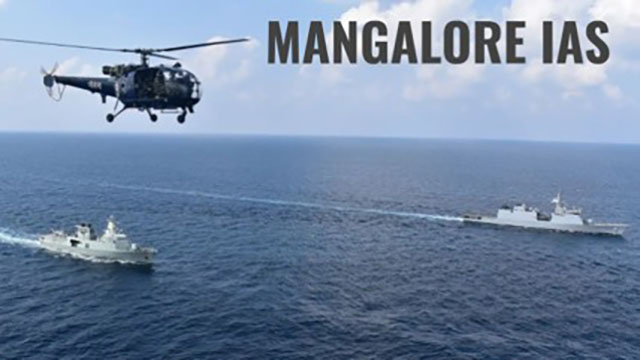
1. India-Oman Joint Naval Exercise
The 15th edition of the India and Oman bilateral naval exercise Naseem Al Bahr 2026 got underway on 9 November 2026 in the Al Batinah region of Oman. Participating in the exercise are ships from the Indian Navy and Royal Navy of Oman. The event, which will last until 12 November, includes a series of professional interactions, naval exercises and hands-on drills to boost coordination, interoperability and maritime cooperation.
Naseem Al Bahr 2026
The 15th edition of Naseem Al Bahr (also known as Sea Breeze) is being held by the Indian Navy and Royal Navy of Oman. The exercise began in the Al Batinah maritime area of Oman on 9 November and will run until 12 November 2026, Oman’s official news agency reported.
The Indian Navy’s INS Surat arrived in Muscat on 8 November to take part in the exercise. The event includes a series of professional interactions during the harbour and sea phases, as well as a Coordinated Patrol.
Exercise: Naseem Al Bahr 2026
Also Known As: Sea Breeze
Edition: 15th
Countries Involved: India and Oman
Indian Force: Indian Navy
Omani Force: Royal Navy of Oman
Indian Ship: INS Surat
Location: Al Batinah maritime area, Oman
Start Date: 9 November 2026
End Date: 12 November 2026
First Exercise: 1993
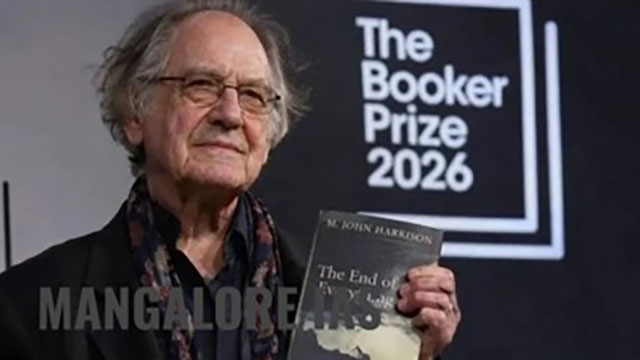
2. Booker Prize 2026
British author M. John Harrison won the Booker Prize in 2026 on 9 November for his dystopian novel ‘The End of Everything’. The 81-year-old author made history as the oldest recipient of the prestigious award. Harrison beat out Canadian author Margaret Atwood (who was 79 years old when she won the prize alongside someone else in 2019). He won the £50,000 prize at a ceremony in Old Billingsgate, London. His 13th novel was chosen unanimously by judges after being up against 163 entries.
Who is M. John Harrison?
Michael John Harrison (professionally known as M. John Harrison) is a British author, short story writer and literary critic.
Harrison has written for over 6 decades and has become well-known for his work in the science fiction and fantasy genres.
He has written some amazing books and has won many awards, including, Harrison’s Booker win was his very first nomination. However, he was a judge for the Booker Prize in 2022.
About ‘The End of Everything’
‘The End of Everything’ is a dystopian science fiction novel. It is Harrison’s 13th book and was published by Serpent’s Tail, an imprint of independent publishing house Profile Books.
It is a 198-page novel set in the future on the Kent coast of England. A society is trying to recover from a strange event that happened.
The main characters are,
Phillip Tennent – A beachcomber who makes a living out of collecting weird items.
Marnie – Phillip’s old aunt who lives with him and paints.
iGhetti – Strange shape-shifting creatures linked to the event.
This book looks at how society falls into chaos. It looks at themes such as uncertainty, memory and trying to understand the world around you. It brings dystopian elements, dark humour, political satire and some sci-fi.
Harrison has said the 2008 financial crisis inspired him to write this book. He uses the concept of a large disaster to look at how the world we know no longer makes sense.
3. World Science Day 2026
World Science Day for Peace and Development is celebrated each year on 10th November. It focuses on encouraging increased engagement with science in society and Sustainable Development. Organized by UNESCO, it encourages collaboration between scientists, governments and communities to increase engagement with science. The theme for 2026 is ‘Common ground through science diplomacy’. This focuses on increasing dialogue through science and working together to overcome global issues.
History of World Science Day
The idea to celebrate a World Science Day came from the World Conference on Science in 1999 in Budapest, Hungary. The conference highlighted the need to increase collaboration between science and society.
In 2001 UNESCO declared 10th November World Science Day for Peace and Development. The first worldwide celebration of the day happened in 2002 under the auspices of UNESCO.
Since then, the day has encouraged engagement with science from scientific institutions, government, schools, researchers and the public.
World Science Day 2026 Theme
Theme – Common ground through science diplomacy.
This theme shows how important science collaboration is in helping to create an understanding between countries. Science diplomacy helps to improve relations between countries using science, research and dialogue.
This theme has particular importance to issues that have become a global concern, such as climate change, biodiversity loss, public health and Sustainable Development. It encourages countries to see science as a shared resource and work together to find solutions.
4. Swachh Survekshan Awards 2025-26
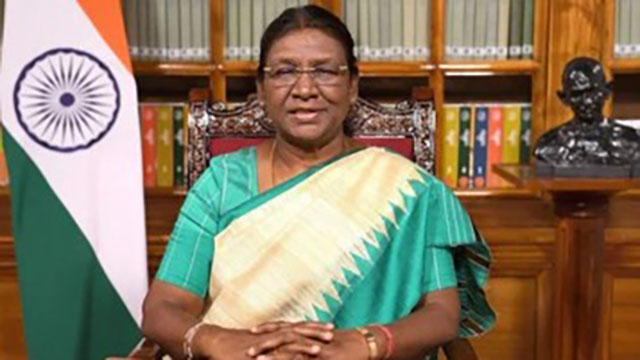
President of India, Droupadi Murmu, will present the Swachh Survekshan Awards 2025-26 on 11 th November, 2026 at Vigyan Bhawan, New Delhi. The 10th edition of Swachh Survekshan Awards recognises cities and States for their contribution to the Swachh Bharat Mission-Urban (SBM-U). This evaluation includes over 4751 cities and places more emphasis on citizen engagement, cleanliness of water bodies, sanitation services and behavioural change.
Key Highlights of the Award
Name of the Award: Swachh Survekshan Awards 2025-26
Edition: 10th
Date of Award Presentation: 11th November 2026
Venue: Vigyan Bhawan, New Delhi
Chief Guest of the Event: President Droupadi Murmu
Nodal Ministry: Ministry of Housing and Urban Affairs
Department Incharge: Department of Urban Development
Theme: Swachhata Ki Nayi Pehel – Badhayein Haath, Karein Safai Saath
Number of cities included: Over 4751 Evaluation
Criteria: 43 indicators across 10 key areas.
What is Swachh Survekshan?
Swachh Survekshan (SS) is the flagship cleanliness evaluation undertaken under the Swachh Bharat Mission-Urban. This evaluates the performance of Urban Local Bodies (ULBs) in terms of sanitation and solid waste.
Since its inception in 2016, the number of cities evaluated has increased massively from 73 Urban Local Bodies to over 4751 cities in the 2025-26 edition. It drives cities to compete healthily and improve urban sanitation.
The awards for 2025-26 will reward cities and States for their outstanding achievements over the last decade.
5. UNESCO’s Memory of the World Asia-Pacific Register
UNESCO’s Memory of the World Asia-Pacific Regional Register includes manuscripts relating to the Mahabharata, Rajatarangini by Kalhana and Arthashastra by Kautilya. This decision was made at the 11th Session of the Memory of the World Committee for Asia and the Pacific (MOWCAP), which was held in Jakarta, Indonesia, from 2nd to 6th November 2026. The dossiers for these nominations were developed by Indira Gandhi National Centre for the Arts (IGNCA) and the country now has a total of six inscriptions in its regional list.
Three Indian Manuscripts Included in Asia-Pacific Register by UNESCO
The three inscriptions include manuscripts that highlight India’s literary, historical and intellectual heritage.
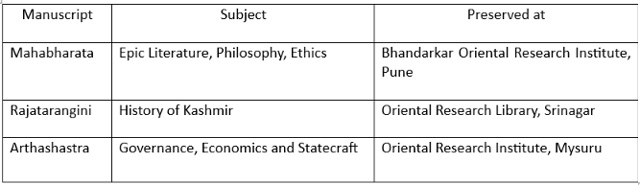
These recognitions relate to specific manuscript documents. The dossiers were prepared by the IGNCA, an organisation under the Ministry of Culture.
What is UNESCO’s Memory of the World Programme?
The Memory of the World (MoW) Programme launched by UNESCO in 1992 aims to safeguard and make accessible documentary heritage that holds significant historical, cultural and intellectual value.
This can include a wide range of media such as manuscripts, archives, rare books, photographs, film, sound recordings etc.
The MoW Programme aims to protect important documents from damage, neglect, destruction and loss whilst making them available to current and future generations.
Join Our WhatsApp Channel For Free PDF
Three Types of Register
The programme consists of three types of register,
- International Register: For documentary heritage of global significance.
- Regional Registers: For documentary heritage of significance to a certain geographical area.
- National Registers: To identify and promote documentary heritage of significance to the nation.
The Asia-Pacific Regional Register is managed by the Memory of the World Committee for Asia and the Pacific (MOWCAP).
1. Rajatarangini by Kalhana
The Rajatarangini (River of Kings) is a Sanskrit historical text written by the Kashmiri historian Kalhana in 1148-1149CE during the rule of King Jayasimha.
It details the history of rulers, royal families, political events and socio-cultural aspects of Kashmir.
Key information about this document,
Written by: Kalhana
Language used: Sanskrit
Time Period: 12th Century CE
Script used: Sharada
Material used: Birch bark (Bhurjapatra) from Kashmir
It contains eight volumes or ‘Tarangas’:
There are approximately 7826 verses.
Preserved at: Oriental Research Library, Srinagar.
The Rajatarangini contains information gathered from previous chronicles, inscriptions and royal records to create a timeline of historical events in Kashmir. It is considered an important example of historical writing in medieval India.
2. Mahabharata
The Mahabharata is one of two great Sanskrit epics in India. It was traditionally written by Sage Vyasa and tells the story of the conflict between the Pandavas and Kauravas. It contains many themes relating to Dharma, duty, ethics, politics and human values.
This particular document is a birch bark manuscript that contains an older version of this epic from Kashmir.
Key information,
Traditionally written by: Maharishi Ved Vyasa
Language used: Sanskrit
Main Story: Kurukshetra War
Main Families: Pandavas and Kauravas
Contains Bhagavad Gita: A philosophical text containing 700 verses discussing the relationship between Lord Krishna and Arjuna. This is part of the Bhishma Parva.
Material used: Birch bark (Bhurjapatra)
Preserved at: Bhandarkar Oriental Research Institute (BORI), Pune, Maharashtra.
This document is of great importance as it is an older text from Kashmir. It was obtained from Kashmir in 1875 by Indologist Georg Bühler. The Mahabharata has had an impact on the literary, performance and cultural traditions across South and Southeast Asia.
3. Arthashastra by Kautilya
This ancient Indian text contains information on how to govern a nation. It was traditionally written by Kautilya (also known as Chanakya or Vishnugupta). He was connected to the Mauryan Emperor Chandragupta Maurya.
Key Information,
Written by: Kautilya (Chanakya/Vishnugupta)
Traditionally associated with the Mauryan period – commonly dated to around the 4th Century BCE.
Language: Sanskrit
Topic: Governance, Administration, Economics and Military Tactics
Contains 15 volumes, 150 chapters and 180 sections.
Material used: Palm Leaf
Script used: Grantha
Preserved at: Oriental Research Institute, Mysuru, Karnataka.
The palm leaf manuscript that has been recognised by UNESCO is a complete manuscript from the 16th Century. The text also discusses key concepts within ancient Indian political thought.
Key Concepts within Arthashastra
Saptanga Theory: The seven elements of the state. These include Swami (ruler), Amatya (ministers), Janapada (land and people), Durga (fort), Kosa (treasury), Danda (army) and Mitra (ally).
Mandala Theory: Explains the relationships between neighbouring countries and foreign policy.
Shadgunya: Six methods of foreign policy. This includes Peace, War, Neutrality, War Preparation, Alliance and Dual Policy.
Four Upayas: Same (conciliation), Dana (gifts/concessions), Bheda (divide) and Danda (force/punishment).
Previously Listed Items from India
Prior to the additions in 2026, there were three items from India listed in the Asia-Pacific Register. This was during the 10th session of MOWCAP in Ulaanbaatar, Mongolia in 2024.
These were,
- Ramcharitmanas – An epic poem written by Tulsidas, detailing the life of Lord Rama.
- Panchatantra – An ancient text of animal fables.
- Sahrdayaloka-Locana – A Sanskrit text about Indian poetics.
6. MINURSO
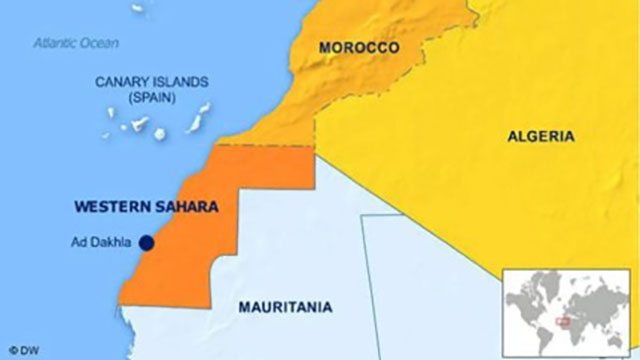
The United Nations Mission for the Referendum in Western Sahara (MINURSO) has reportedly entered its liquidation phase after 35 years of operations, following the failure of the United Nations Security Council (UNSC) to renew its mandate.
According to the reported developments in November 2026, a diplomatic standoff between the United States and Russia prevented agreement on extending the mission. The disagreement centred on competing approaches to resolving the long-standing territorial dispute between Morocco and the Polisario Front.
MINURSO was established in April 1991 under UNSC Resolution 690 to monitor a ceasefire and organise a referendum allowing the people of Western Sahara to determine their political future.
The reported closure of the mission represents a significant development in UN peacekeeping, although it does not resolve Western Sahara’s disputed international status or eliminate the Sahrawi people’s right to self-determination.
7. International Solar Alliance
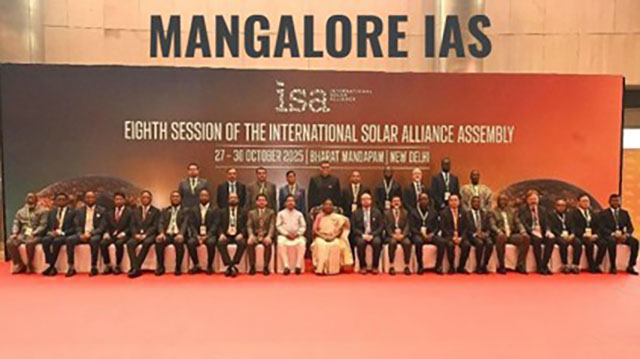
The Commonwealth of The Bahamas joined the International Solar Alliance (ISA) as its 116th member country on 4 November 2026, following the submission of its Instrument of Accession to the ISA Framework Agreement.
The formal accession took place during the 9th Session of the International Solar Alliance Assembly, held in New Delhi, India.
The Instrument of Accession was handed over by Peter Nicholas Symonette Jr., High Commissioner of the Bahamas, to P. S. Gangadhar, Joint Secretary, Economic Diplomacy and Head of Depository.
The development strengthens international cooperation in solar energy and expands the participation of Small Island Developing States (SIDS) in the global transition towards renewable energy.
8. Stand-Up India Scheme
The Union Cabinet, headed by PM Narendra Modi, has approved to extend the Stand Up India Scheme for 5 years till 31st March 2031. The scheme aims to encourage women, SCs and STs to become entrepreneurs and will provide financial assistance to an additional 2.5 lakh entrepreneurs. The cabinet has also approved the creation of a Credit Guarantee Corpus of INR 4,111 Crore. The scheme launched in April 2016 has so far facilitated loans to over 2.75 lakh women and SC/STs.

9. ATA Carnet System
The United Arab Emirates (UAE) has implemented the electronic ATA Carnet (eATA) system to allow businesses and professionals to export and import goods temporarily. The UAE is now the first non-European country to implement the paperless process. The system is designed to make the temporary export of goods for international trade shows, trade fairs, professional equipment and other approved reasons easier. It will also reduce the bureaucratic process.
What is an ATA Carnet?
It is an international customs document that enables you to import goods into an associated country temporarily, without having to pay customs duties and taxes.
An ATA Carnet is used for goods that need to temporarily cross international borders and will be exported again within the allowed timeframe. They can generally last for up to a year and can be used across many journeys.
Common examples of goods are,
- Goods for trade shows
- Samples
- Professional equipment
- Generally, perishable items are not covered by this scheme.
10. UPSC Mains General Studies Paper IV (Ethics, Integrity, and Aptitude) case study question modeled on the Nvidia honeytrap controversy. It tests corporate governance, conflict of interest, national security versus commercial profit, and personal versus professional integrity.
Case Study: Corporate Leadership, Personal Conduct, and National Security
Scenario
You are the Chairperson of the Audit and Governance Committee on the Board of Directors of AetherCore Technologies, a global leader in advanced artificial intelligence hardware. The company is headquartered in a democratic nation that strictly regulates the export of high-end semiconductor chips to rival countries on grounds of national security.
Recently, intelligence agencies briefed select board members regarding an ongoing investigation involving Mr. Vikramaditya, the visionary founder and CEO of AetherCore. Under his leadership, the company grew into a multi-trillion-dollar enterprise, making him indispensable to investor confidence and employee morale.
The intelligence briefing reveals that Mr. Vikramaditya has been involved in an undisclosed extramarital relationship with Ms. Lin, a foreign-born tech executive based in a third-party country. Over the past two years, Ms. Lin’s firm suddenly became one of AetherCore’s top five global buyers, purchasing billions of dollars worth of restricted AI chips. Intelligence officials suspect Ms. Lin is an operative working for a rival state and that her firm acted as a front to illegally divert these sensitive chips to the rival nation.
When confronted privately by the Board, Mr. Vikramaditya admits to the personal affair and expresses deep remorse to his family and colleagues. However, he vehemently denies sharing any proprietary technology, bypassing export compliance protocols, or knowing about any illicit diversion of chips. He argues that his personal life is separate from his professional duties and offers to cooperate fully with any internal inquiry. Meanwhile, news of the scandal leaks to the media, causing the company’s stock to drop sharply and triggering demands from institutional investors for clarity.
Questions
1. Identify the key ethical issues and conflicts of interest involved in this case from the perspectives of the CEO, the Board of Directors, and the State. (10 Marks)
2. Critically examine the argument that a corporate leader’s private moral conduct should be judged separately from their professional competence and fiduciary duties. (10 Marks)
3. As the Chairperson of the Governance Committee, what course of action will you recommend to the Board? Evaluate the available options and justify your chosen path while balancing shareholder value, corporate ethics, and national security. (10 Marks)
write to: mangaloreias@gmail.com
11. UPSC Mains General Studies Paper III (Internal Security) analytical question inspired by the Nvidia honeytrap and chip smuggling controversy. It connects modern espionage tactics, dual-use technology supply chains, and India’s national security challenges.
Question:
"Modern espionage has shifted from targeting traditional state institutions to infiltrating private sector supply chains, dual-use technology firms, and key corporate leadership."
In light of recent global controversies involving honeytraps and the illicit diversion of advanced semiconductor hardware, discuss the vulnerabilities of India’s emerging critical technology ecosystem. Suggest a comprehensive framework to safeguard national security without stifling corporate innovation. (15 Marks / 250 Words)
write to: mangaloreias@gmail.com
- Weekly Wisdom - November 6, 2026
- Weekly Wisdom - October 30, 2026
- Weekly Wisdom - October 23, 2026
- Weekly Wisdom - October 18, 2026
- Weekly Wisdom - October 9, 2026
- Weekly Wisdom - October 3, 2026
- Weekly Wisdom - September 25, 2026
- Weekly Wisdom - September 18, 2026
- Weekly Wisdom - September 11, 2026
- Weekly Wisdom - September 4, 2026
- Weekly Wisdom - August 28, 2026
- Weekly Wisdom - August 16, 2026
- Weekly Wisdom - August 7, 2026
- Weekly Wisdom - August 1, 2026
- Weekly Wisdom - July 25, 2026
- Weekly Wisdom - July 18, 2026
- Weekly Wisdom - July 11, 2026
- Weekly Wisdom - July 3, 2026
- Weekly Wisdom - June 26, 2026
- Weekly Wisdom - June 19, 2026
- Weekly Wisdom - June 12, 2026
- Weekly Wisdom - June 5, 2026
- Weekly Wisdom - May 29, 2026
- Weekly Wisdom - May 22, 2026
- Weekly Wisdom - May 15, 2026
- Weekly Wisdom - May 8, 2026