1. E85 Fuel — Fueling Atmanirbhar Mobility
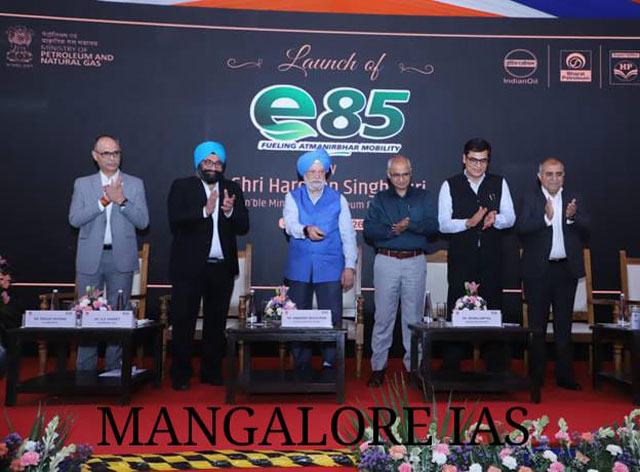
E85 is a high-ethanol blended fuel comprising 80–85% ethanol and 14–19% petrol, specifically designed for use in flex-fuel vehicles (FFVs). The initiative was launched by the Ministry of Petroleum and Natural Gas to facilitate the adoption of FFVs capable of operating on ethanol blends ranging from E20 to E100.
Key Benefits of E85:
• Priced nearly Rs 20 per litre lower than conventional petrol — passing economic benefits of domestically produced ethanol to consumers.
• Flex-fuel vehicles on E85 can reduce lifecycle greenhouse gas (GHG) emissions by ~61% compared to conventional petrol vehicles.
• High Research Octane Number (RON) of ~108 — superior knock resistance allowing engines to operate at higher compression ratios.
• Promotes cleaner combustion with near-zero particulate matter emissions, improving urban air quality.
2. Digital India BHASHINI Division (DIBD)
BHASHINI is India's national initiative for AI-driven multilingual digital inclusion and language technology. It operates under the Digital India Corporation (DIC), Ministry of Electronics and Information Technology (MeitY).
Key Features:
• Through the National Hub for Language Technology (NHLT), BHASHINI enables scalable speech and text-based AI services across Indian languages.
• Drives open-source innovation, multilingual AI research, dataset creation, startup enablement, and academic collaboration.
• The Bhashini Platform makes AI and NLP resources available to MSMEs, Startups and Individual Innovators in the public domain.
• Strengthens India's digital public infrastructure ecosystem for governance and public platforms.
3. World Environment Day 2026
Theme: "Only One Earth"
Host Country: Azerbaijan — highlighting the planetary crises of climate change and ecosystem degradation.
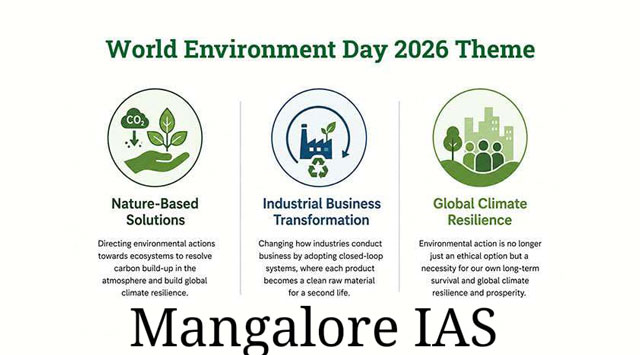
Three Pillars of the 2026 Theme:
• Nature-Based Solutions: Directing environmental actions towards ecosystems to resolve carbon build-up and build global climate resilience.
• Industrial Business Transformation: Adopting closed-loop systems where each product becomes a clean raw material for a second life.
• Global Climate Resilience: Environmental action is a necessity for our long-term survival, global climate resilience and prosperity.
4. Kirthai-II Hydroelectric Project
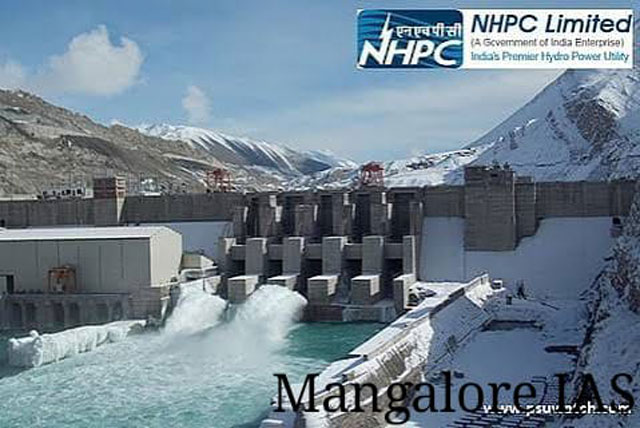
Kirthai-II is a 930 MW hydropower project planned on the Chenab River in the Kishtwar district of Jammu and Kashmir. It is being developed by Chenab Valley Power Projects.
Key Details:
• Ownership: NHPC (51%) and Jammu & Kashmir State Power Development Corporation (49%).
• Type: Run-of-river project with a reservoir capacity of 51.26 million cubic meters.
• Infrastructure: 121 m-high concrete gravity dam, 4.29 km-long headrace tunnel, 840 MW underground powerhouse, and a 90 MW dam toe powerhouse.
5. UN General Assembly — New Security Council Members (2027–28)

The UN General Assembly (UNGA) has elected five new non-permanent members to the UN Security Council for the 2027–2028 term. Their tenure begins on 1 January 2027.
Newly Elected Non-Permanent Members:
• Austria
• Kyrgyzstan
• Portugal
• Trinidad and Tobago
• Zimbabwe
Permanent Members (P5) with Veto Power:
• United States, United Kingdom, France, Russia, China
Note: Germany, considered a strong contender, failed to secure a seat despite heavy lobbying
6. University of Liverpool — First Indian Campus in Bengaluru
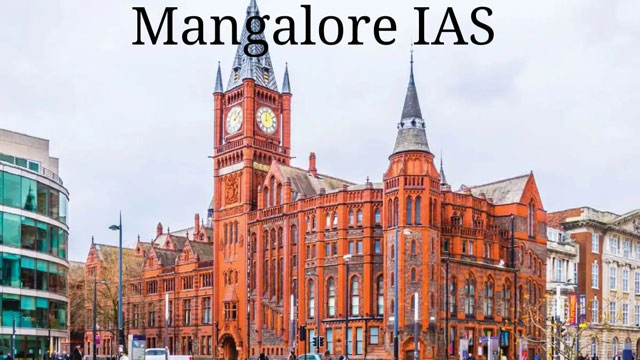
The University of Liverpool, one of the UK's leading universities, has received a Letter of Approval (LoA) from the Ministry of Education to establish its campus in Bengaluru, Karnataka.
Significance:
• Marks a key step in implementing the National Education Policy (NEP) 2020, which aims to internationalize higher education.
• Encourages globally reputed institutions to establish campuses in India.
• Strengthens India's higher education ecosystem with world-class academic standards and research opportunities.