Mangalore IAS - Current Affairs 2026
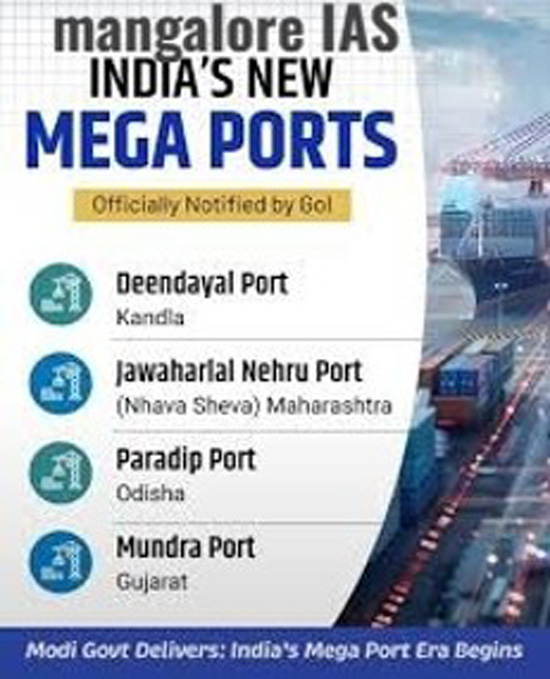
1. Centre Notifies Kandla, JNPA, Paradip and Mundra as Mega Ports
According to the Indian Ports Act, 2025, four ports have been declared as mega ports in India by government. This was done by the Ministry of Ports, Shipping and Waterways by way of notification dated September 25, 2026. The four mega ports include Deendayal Port (Kandla), Jawaharlal Nehru Port (Nhava Sheva), Paradip Port and Mundra Port.
The declaration has been made in accordance with the standards notified under Section 73 of the Act. It should be noted that mega-port is just another classification and not a type of port.
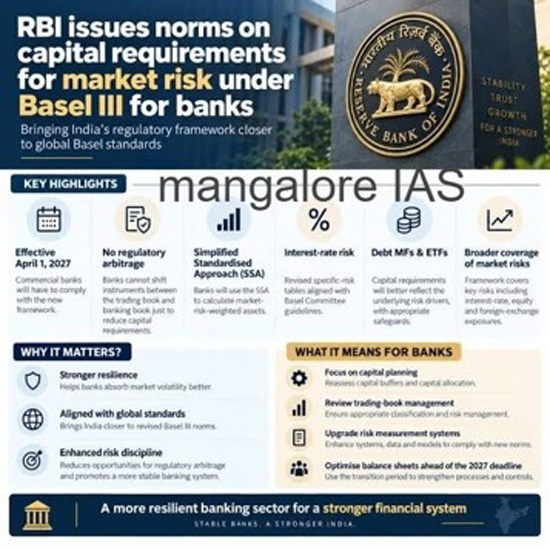
2. RBI Basel III Market Risk Capital Rules.
The Reserve Bank of India (RBI) issued its final Basel III market risk capital rules on 21 September 2026, officially titled the Reserve Bank of India (Commercial Banks – Minimum Capital Requirements for Market Risk) Directions, 2026. Taking effect on 1 April 2027, these directions mandate that commercial banks calculate market risk capital using the Simplified Standardised Approach (SSA). This aligns Indian banking operations with the global Basel III framework, forcing a shift toward tighter, data-driven daily tracking of trading portfolios.
Five Major Regulatory Changes
1) Trading Book HFT Alignment: Follows the Investment Directions, 2025. All instruments classified as Held for Trading (HFT) sit in the trading book, while HTM and AFS remain in the banking book. Book-switching to artificially lower capital is blocked by a mandatory Pillar 1 surcharge.
2) Revised Forex & NOP Rules: Sets the capital charge at 9% of the overall Net Open Position (NOP) across both trading and banking books. Banks can exclude structural forex positions up to a specific cap, provided the exclusion remains for at least six months.
3) BCBS-Aligned Specific Risk: Revises interest rate specific risk tables to match Basel guidelines perfectly. Issuer ratings and residual maturity now strictly dictate charges (e.g., a 1.60% charge for an AA-rated corporate bond with over 24 months to maturity).Debt Mutual Fund Look-Through: Grants favorable look-through capital treatment only to qualifying open-ended debt funds (minimum 90% debt asset allocation, monthly data disclosures, daily NAV). Non-qualifying funds face penal equity-style charges of 9% plus 9%.
4) Credit-Derivative Hedges Expansion: Adds Total Return Swaps (TRS) under the Credit Derivatives Directions, 2026 to the hedging toolkit. Exact matches on reference obligations can receive a full 100% capital offset, compared to the standard 80% for CDS.

3. Arctic Defense Agreement
On September 22, 2026, U.S. President Donald Trump, Danish Prime Minister Mette Frederiksen, and Greenland Prime Minister Jens-Frederik Nielsen signed a landmark Arctic defense agreement on the sidelines of the United Nations General Assembly in New York to expand U.S. military presence and block adversarial influence in the region.
NATO Integration and Sovereignty NATO Engagement: The pact promotes deeper NATO cooperation in the Arctic, including joint intelligence sharing, military exercises, and defense planning.Territorial Integrity: The agreement reaffirms Danish sovereignty and Greenland's right to self-determination. Crucially, the terms of the accord will remain in legal force even if Greenland eventually votes for full independence, provided the new state remains within the NATO alliance framework.

4. World Heart Day 2026
World Heart Day is marked every year on 29 September for raising awareness concerning CVDs, their risk factors and preventive measures against them. For 2026, the theme will be “Don’t Miss a Beat”, emphasizing the significance of spotting warning signs and being mindful about heart health.
The campaign stresses the need for people to concentrate on preventing CVD, detecting it in its early stages and leading a healthy life. The WHO has continuously identified tobacco usage, poor diets, physical inactivity, hypertension and other risk factors as significant contributors to cardiovascular diseases.
5. PRAMAAN
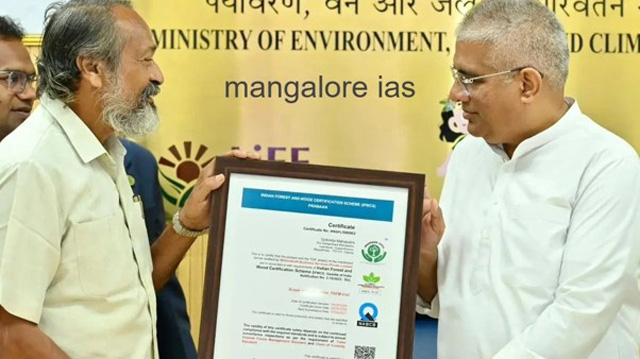
PRAMAAN certificates have been presented by Union Minister of Environment, Forest and Climate Change Bhupender Yadav under the Indian Forest and Wood Certification Scheme (IFWCS), thereby signifying that the Indian certification scheme has moved from policy making stage to practical implementation at ground level. These certificates have been awarded to Andhra Pradesh Forest Development Corporation (APFDC) in view of their plantations on 33,000 hectares of land as well as Govind Mohapatra who is a bamboo farmer of Odisha Bamboo Development Agency.
What is PRAMAAN?
PRAMAAN is an acronym for Programme for Recognition and Accreditation of Sustainable Management Practices for Agroforestry and Natural Forestry Resources.
It is the trade name for the Indian Forest and Wood Certification Scheme (IFWCS), which was introduced by the Ministry of Environment, Forest and Climate Change in December 2023.
The certification system certifies sustainable management practices and ensures a system whereby forest and tree products can be tracked to certified origins. According to IIFM, PRAMAAN is a tool that may help with responsible sourcing and meeting the requirements of international frameworks like the EUDR.
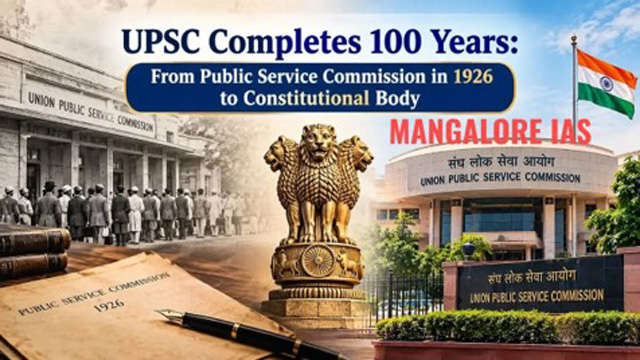
6. UPSC Completes 100 Years
The Union Public Service Commission will complete its 100th year in India on 1 October 2026, which will be a century of the establishment of the first Indian Public Service Commission in 1926. The organization started off as an advisory commission through the Government of India Act, 1919 structure and developed into the Federal Public Service Commission and finally became the UPSC after the implementation of the Constitution in 1950. Currently, the organization is a constitutional body with powers from Articles 315 to 323.
From the 1926 Public Service Commission to UPSC
The beginning of the merit system for recruiting members of the civil service in India can be traced back to the ICS (Indian Civil Service) examination of 1855 that replaced nomination with open competitive selection process. The examinations used to take place in London, causing great difficulties for Indians to participate in them.
Under the provisions of the Government of India Act of 1919, a Public Service Commission was to be established. A report was prepared by the Lee Commission, headed by Lord Lee, to establish a Public Service Commission in 1924. As a result, the first Public Service Commission was established on 1 October 1926, consisting of the Chairman Sir Ross Barker and Four Members.
The Government of India Act of 1935 made provisions for a Federal Public Service Commission and Provincial Public Service Commissions. The Federal Public Service Commission started operating in 1937. After India gained independence, it became the Union Public Service Commission on 26 January 1950, obtaining constitutional status under the Constitution of India.
- Weekly Wisdom - September 25, 2026
- Weekly Wisdom - September 18, 2026
- Weekly Wisdom - September 11, 2026
- Weekly Wisdom - September 4, 2026
- Weekly Wisdom - August 28, 2026
- Weekly Wisdom - August 16, 2026
- Weekly Wisdom - August 7, 2026
- Weekly Wisdom - August 1, 2026
- Weekly Wisdom - July 25, 2026
- Weekly Wisdom - July 18, 2026
- Weekly Wisdom - July 11, 2026
- Weekly Wisdom - July 3, 2026
- Weekly Wisdom - June 26, 2026
- Weekly Wisdom - June 19, 2026
- Weekly Wisdom - June 12, 2026
- Weekly Wisdom - June 5, 2026
- Weekly Wisdom - May 29, 2026
- Weekly Wisdom - May 22, 2026
- Weekly Wisdom - May 15, 2026
- Weekly Wisdom - May 8, 2026