Daijiworld Media Network - New Delhi
New Delhi, May 5: Disruptions in global fuel supply chains caused by tensions in West Asia and the potential closure of the Strait of Hormuz have created new export opportunities for Nigeria, as its massive coastal refinery ramps up output and reaches international markets.
According to a report, the Lagos-based refinery owned by Aliko Dangote is operating at full capacity of 650,000 barrels per day. The facility is now supplying petroleum products across West, Central, and East Africa, with shipments also reaching Europe—including the Netherlands and the United Kingdom—as well as parts of Asia.
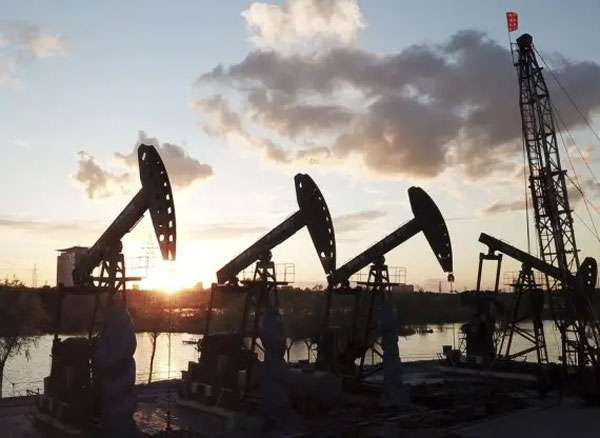
The refinery’s rapid execution has been attributed to a combination of Chinese industrial capabilities and Indian engineering expertise. Multiple Chinese firms contributed to the project’s construction, while India played a key role in engineering management and ensuring continuity.
In January, the Dangote Group renewed a $350 million contract with Engineers India Limited (EIL) to support further expansion of the refinery and its petrochemicals complex. EIL continues its role as Project Management Consultant and Engineering, Procurement, and Construction Management consultant, similar to its involvement in the refinery’s initial phase commissioned in 2024.
At the height of construction, the project employed over 30,000 Nigerians along with thousands of Indian and Chinese workers, reflecting its scale and technical complexity. Around 11,000 Indian professionals were engaged, a move that drew some regional scrutiny, though the company maintained that global expertise was necessary.
Efforts were also made to build local capacity. Between 2016 and 2018, Nigerian graduates were trained in refinery operations at Bharat Petroleum Corporation Limited in Mumbai. The programme trained around 800 individuals, offering exposure to large-scale refining systems similar to those at the Jamnagar Refinery, the world’s largest refining complex.
The report also highlights the contribution of Devakumar V. G. Edwin, who played a significant role in the refinery’s technical development and operational rollout.
The impact of the project is already visible in trade patterns, with Nigeria emerging as a net exporter of refined petroleum products for the first time in March, marking a major shift from its long-standing dependence on imports.