Daijiworld Media Network – Mangaluru
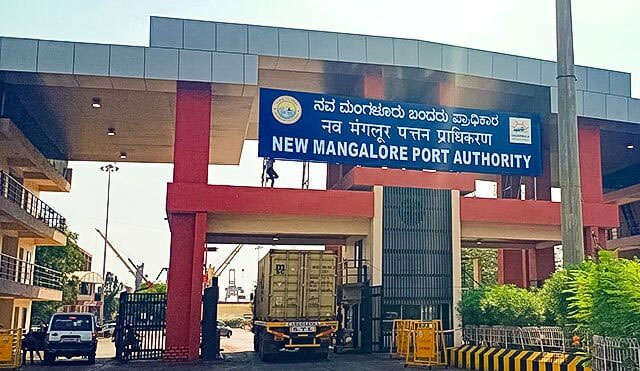
Mangaluru, Apr 1: In a significant move to enhance India’s port infrastructure and strengthen maritime logistics, the union ministry of ports, shipping and waterways has approved a proposal by the New Mangalore Port Authority (NMPA) to redevelop Berth No. 9 for handling liquid bulk cargo under the public-private partnership (PPP) model using the DBFOT framework.
The approval for implementation was conveyed on March 25. The project envisages dismantling ageing infrastructure and carrying out a comprehensive redevelopment of Berth No. 9 to facilitate handling of liquid bulk cargo such as crude oil, petroleum products (POL), and liquefied petroleum gas (LPG).
As part of the modernisation initiative, the berth draft will be enhanced from the existing 10.5 metres to 14 metres, with a future-ready design provision extending up to 19.8 metres. This upgrade will enable the port to accommodate vessels up to 2,00,000 deadweight tonnage (DWT), including very large gas carriers (VLGCs).
Highlighting the importance of the project, union minister of ports, shipping and waterways Sarbananda Sonowal said, “This transformative project is a reflection of the visionary leadership of Prime Minister Narendra Modi, under whom India’s maritime infrastructure is being modernised at an unprecedented pace. By replacing ageing facilities with world-class marine infrastructure, enhancing cargo handling capacity to 10.90 MTPA, and enabling the handling of larger vessels, including VLGCs, we are positioning our ports to meet future energy and trade demands while strengthening India’s role as a global maritime leader.”
The redevelopment project, estimated to cost Rs 438.29 crore, will be executed by a private concessionaire selected through an open competitive bidding process under a single-stage, two-envelope system. The project will have a cargo handling capacity of 10.90 million tonnes per annum (MTPA), with the concessionaire required to achieve a Minimum Guaranteed Cargo (MGC) of 7.63 MTPA by the fifth year of operations.
The construction period is pegged at two years, while the overall concession period will extend to 30 years, including the construction phase.
The project is expected to deliver substantial strategic and operational benefits. It will replace nearly five-decade-old structures with modern marine infrastructure designed for a structural lifespan of 50 years, ensuring long-term sustainability and resilience. The enhanced capacity is also expected to cater to the growing regional demand for liquid bulk cargo, particularly energy commodities.
By enabling the handling of larger vessels, including VLGCs, the redevelopment is likely to improve economies of scale, reduce logistics costs, and enhance the port’s overall competitiveness. Operational efficiency will also be strengthened through mechanisation, including the installation of high-capacity marine unloading arms (MULAs) and automated mooring systems, according to an official release.