Daijiworld Media Network - Mumbai
Mumbai, May 18: Domestic equity markets in India opened sharply lower on Monday, with benchmark indices falling nearly 1% in early trade amid rising crude oil prices and escalating geopolitical tensions in West Asia linked to the US-Iran conflict.
The BSE Sensex dropped as much as 892 points (1.18%) to hit an intraday low of 74,345, while the Nifty 50 slipped 272 points (1.15%) to 23,371 during morning trade.
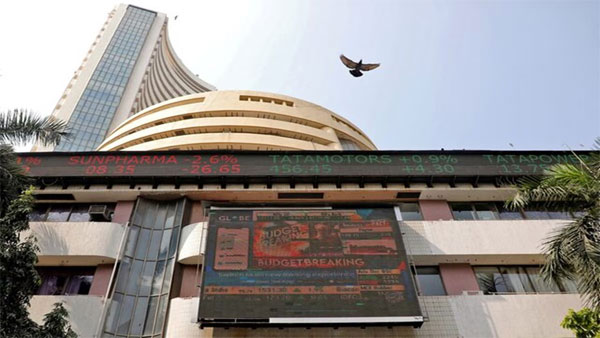
Both indices had opened lower at the start of the session, reflecting weak global cues and heightened investor anxiety over the international energy outlook.
Market breadth remained weak, with most sectoral indices trading in the red. Sectors such as auto, metals, PSU banks, private banks, FMCG, realty, and consumer durables declined between 1% and 2%, indicating broad-based selling pressure. In contrast, the information technology sector showed relative resilience and was the only sector in positive territory.
Several heavyweight stocks, including HDFC Bank, Tata Steel, Mahindra & Mahindra, Titan Company, and Hindustan Unilever, traded lower in the range of 1–3%.
Volatility also increased sharply, with the India VIX rising nearly 6%, reflecting heightened uncertainty among investors.
Analysts attributed the decline to a combination of global risk aversion, geopolitical instability, and a sharp rise in crude oil prices following reports of a drone attack on an energy facility in the United Arab Emirates. Brent crude climbed to around $111.86 per barrel, while WTI crude also surged above $108 per barrel.
Sentiment was further weighed down after comments from Donald Trump warning Iran amid stalled diplomatic efforts, adding to concerns of prolonged instability in the region.
Broader Asian markets also showed weakness, with Japan’s Nikkei and Hong Kong’s Hang Seng declining, although South Korea’s KOSPI managed to trade higher.
Market experts said near-term support for the Nifty lies in the 23,400–23,500 range, while resistance is seen near 23,900–24,000, suggesting continued volatility ahead as global developments unfold.