Daijiworld Media Network - Beirut
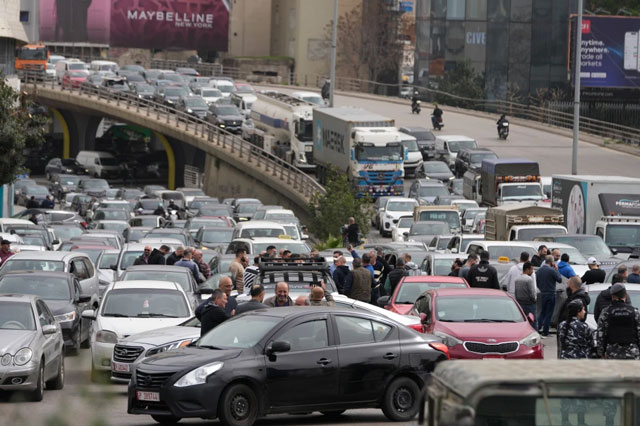
Beirut, Feb 18: Protesters blocked major roads in and around Beirut on Tuesday after Lebanon’s Cabinet approved new taxes that will raise fuel prices and increase the cost of goods to fund pay hikes for public sector employees.
The Cabinet on Monday approved a tax of 300,000 Lebanese pounds (around $3.30) on every 20 litres of gasoline. Diesel was exempted from the levy, as a large section of the population depends on it to power private generators amid chronic shortages in state electricity supply.
The government also agreed to raise the value-added tax (VAT) from 11% to 12% on products already subject to the levy. The proposal still requires parliamentary approval.
Information Minister Paul Morcos said the salary and pension increases for public employees—whose wages have been eroded since the 2019 currency collapse—are expected to cost about $800 million. The pay hikes are aimed at providing the equivalent of six additional months’ salary.
Despite holding one of the largest gold reserves in the Middle East, Lebanon continues to grapple with high inflation, economic stagnation and corruption. The country also sustained an estimated $11 billion in damages during the 2024 conflict between Israel and Hezbollah.
Taxi drivers and other protesters expressed anger over the fuel price increase, blocking roads leading to central Beirut.
One taxi driver participating in the protest said the cost of living has surged, with prices of food and other essentials rising ahead of Ramadan. He warned that demonstrations would intensify if the government failed to respond to their concerns.
Lebanon witnessed mass protests in 2019 when the government proposed new taxes, including a monthly fee on internet calls through apps like WhatsApp. The demonstrations, driven by public anger over corruption and failing infrastructure, paralysed the country for months.
The country has also faced sustained international pressure to implement financial reforms, though progress has been limited.
Separately, the Cabinet reviewed a report from the Lebanese army on efforts to disarm non-state militant groups, including Hezbollah.
The army last month announced completion of the first phase of the plan covering areas south of the Litani River near the Israeli border. The second phase is set to extend to areas between the Litani and Awali rivers, including the port city of Sidon.
Morcos said the second stage could take up to four months, though the timeline may be extended depending on available resources, continued Israeli strikes and on-ground challenges.
The disarmament initiative follows a U.S.-brokered ceasefire that nominally ended the war between Hezbollah and Israel in November 2024. Since then, Israel has continued near-daily strikes in Lebanon, accusing Hezbollah of regrouping, while Hezbollah maintains that it is only obligated to disarm south of the Litani and will not discuss wider disarmament until Israeli forces withdraw from Lebanese territory.