Daijiworld Media Network – Panaji
Panaji, Jun 17: In an embarrassment for the Goa Police, the state government has suspended Anti-Terror Squad (ATS) Superintendent of Police Edwin Colaco over allegations that he registered his birth and marriage in Portugal, a move seen as a preliminary step towards obtaining Portuguese citizenship and a passport.
Colaco, who was reportedly in line for promotion to the Indian Police Service (IPS) cadre, was placed under suspension with immediate effect following a complaint received by the government.
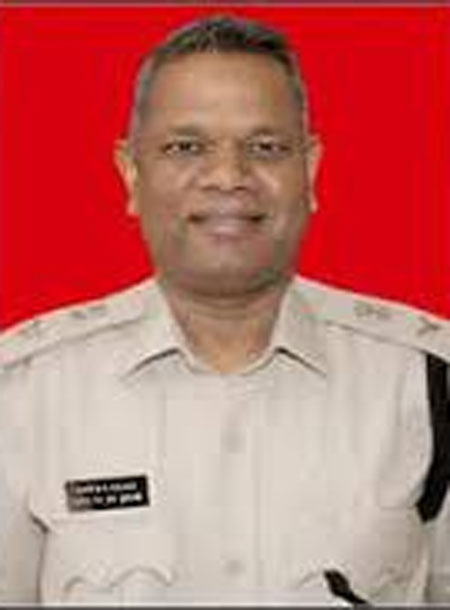
According to officials, an anonymous complaint alleged that Colaco travelled to Portugal between 2008 and 2010 and registered his birth and marriage there. While he had obtained permission from the Goa government to travel abroad, he allegedly did not disclose the purpose of the visit or the country he intended to visit.
A senior government official confirmed that Colaco would remain attached to the Home Department at the Secretariat in Porvorim during the suspension period. He has also been directed not to leave the headquarters without prior permission from the competent authority.
The development has revived the long-standing debate surrounding dual citizenship and Portuguese nationality among Goans.
Notably, in October 2014, Goa Police had registered a First Information Report (FIR) against Colaco, six unidentified staff members of the Bombay High Court at Goa, 43 advocates, around 500 serving and retired government employees, and several others over allegations of acquiring dual citizenship.
The accused were alleged to have obtained Portuguese citizenship by securing a Bilhete de Identidade (Portuguese identity document) without surrendering their Indian citizenship.
The case was registered under provisions of the Foreigners Act, the Registration of Foreigners Act, and the Passport Act following directions from a Judicial Magistrate First Class (JMFC) court in Panaji.
Thousands of Goans have registered their births in Portugal under provisions extended by the former colonial rulers to individuals born before Goa's liberation in 1961 and their descendants. While many have used Portuguese nationality to seek employment and residency opportunities in Europe, the practice has also raised legal concerns regarding dual citizenship.
The issue has periodically generated political controversy in Goa, as several politicians, police personnel and government officials have reportedly obtained Portuguese passports or identity cards while retaining Indian citizenship.
Last year, Chief Minister Pramod Sawant urged the Union government to grant amnesty to Goans who had obtained Portuguese identity documents, allowing them to cancel such registrations and retain their Indian citizenship.
In a communication to the Union Ministry of Home Affairs, Sawant argued that the cancellation of passports and related action had adversely affected the livelihoods of many Goans and called for a one-time relief mechanism to resolve the issue.
Further inquiry into the allegations against Colaco is expected to continue.