Daijiworld Media Network - Mumbai
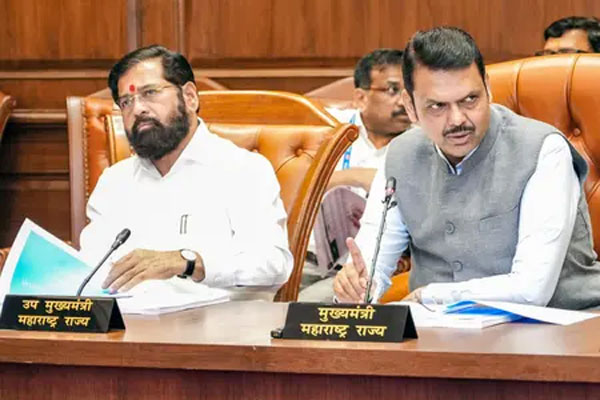
Mumbai, Jun 16: The Maharashtra Cabinet, chaired by Chief Minister Devendra Fadnavis, on Tuesday approved a series of major policy decisions aimed at strengthening healthcare infrastructure, expanding rural water supply, promoting technological innovation and improving digital connectivity across the state.
Nagpur to Get Advanced Medical Cyclotron Facility
In a significant step for healthcare services in central India, the Cabinet approved the establishment of the Nagpur High-Energy Medical Cyclotron Project (NHECP) under the Medical Education and Drugs Department.
The state government said the facility will be the first of its kind in the region and will substantially improve access to advanced diagnostic services for patients suffering from complex diseases.
The high-end cyclotron technology will support precision medicine and sophisticated imaging procedures, reducing the need for patients, especially those from economically weaker backgrounds, to travel to major metropolitan cities for specialised diagnostic tests.
New Policy to Promote Drone and Unmanned Systems Industry
The Cabinet also approved the Maharashtra Unmanned Systems Policy 2026, which aims to position the state as a leading centre for technology development and advanced manufacturing.
Managed by the Department of Electronics, Information Technology and Artificial Intelligence, the policy seeks to encourage the production of unmanned systems operating across aerial, maritime and land-based sectors.
The initiative will support research and development, manufacturing and skill development programmes related to drones, automated agricultural systems and specialised robots designed for hazardous and high-risk industrial environments.
Rural Drinking Water Policy Approved
To address recurring water shortages in villages, the government approved the Maharashtra Rural Drinking Water Policy 2026.
Implemented through the Water Supply and Sanitation Department, the policy aims to create a long-term and sustainable rural water management system by integrating existing water supply schemes.
The objective is to ensure every rural household receives safe, treated and high-quality drinking water through systematic planning and efficient implementation.
BharatNet Rollout to Accelerate Through Dedicated Agency
The Cabinet also approved a revised implementation framework for the BharatNet programme in Maharashtra.
Under the new structure, a Special Purpose Vehicle (SPV) named Mahanet Digital Infrastructure Limited (MDIL) will be established to oversee the expansion of high-speed broadband infrastructure.
The agency will be responsible for accelerating internet connectivity in rural and remote regions, helping bridge the digital divide across the state.
Employment Guarantee Law to be Updated
The state government also approved an ordinance to amend the Maharashtra Employment Guarantee Act, 1977.
The changes are intended to align the state legislation with the provisions of the Viksit Bharat–G Ramji (VBG Ramji) Act, 2025, ensuring smoother implementation of welfare programmes related to rural employment.
Officials said the legal harmonisation would streamline the delivery of benefits under the scheme across Maharashtra.
Six-Month Extension for Caste Validity Certificate Submission
In a relief measure for elected representatives of local self-government bodies, the Cabinet granted a final six-month extension for submitting mandatory caste validity certificates.
The Urban Development Department has been authorised to introduce amendments to laws governing local bodies, including the Municipal Corporation of Greater Mumbai Act, the Maharashtra Municipalities Act and the Maharashtra Municipal Councils, Nagar Panchayats and Industrial Townships Act, to formalise the extension.