A secured Credit Card is often an excellent way to begin building a credit history, especially for first-time borrowers or individuals with limited income documentation. Most secured cards are issued against a Fixed Deposit, giving customers access to credit while providing the bank with collateral. If you are planning to close your credit card, you may wonder what happens to the credit card against FD arrangement and when your Fixed Deposit is released. Understanding the process can help you avoid surprises and ensure a smooth closure.
What is a Credit Card against an FD?
A credit card against FD is a secured Credit Card issued against an eligible Fixed Deposit maintained with the bank.
Typically:
- The Fixed Deposit acts as collateral.
- The Credit Card's limit is usually linked to the deposit amount.
- The Fixed Deposit generally continues to earn interest according to the applicable deposit terms.
- The card can be used like many other Credit Cards for eligible transactions.
The exact features depend on the bank's policies and the specific card variant. For instance, you can explore the FIRST WOW! Credit card by IDFC FIRST Bank. It is an FD-backed credit card offering 4X reward points on eligible transactions while you earn interest on your FD amount.
What happens when you close the Credit Card?
Closing a credit card involves more than simply requesting cancellation.
The bank generally follows a process such as:
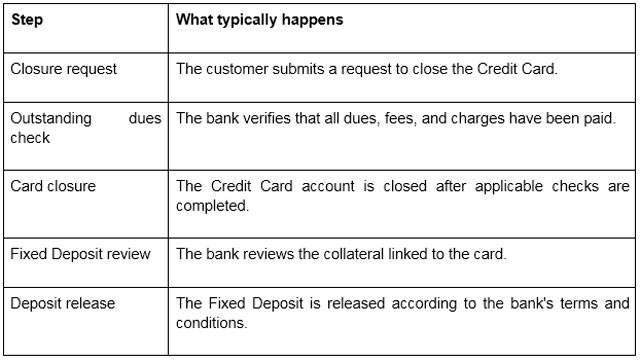
The exact timeline varies across banks.
When is the Fixed Deposit released?
The Fixed Deposit is generally released only after:
- All outstanding balances have been cleared.
- Pending interest, fees, or charges, if any, have been settled.
- No disputed transactions remain.
- The Credit Card closure process has been completed successfully.
If any amount remains payable, the bank may continue to hold the Fixed Deposit until the applicable conditions have been met.
Things to check before closing your card
Before requesting closure, consider reviewing the following.
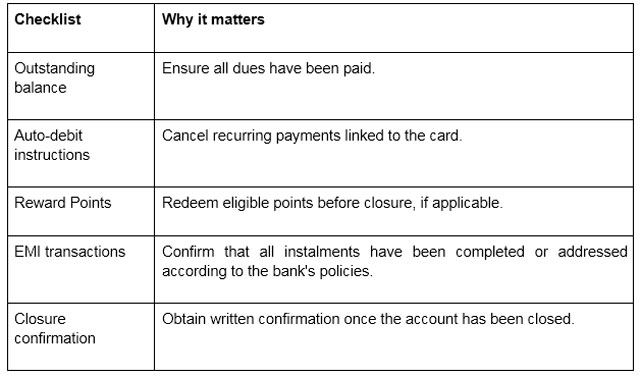
Taking these steps can help prevent delays during the closure process.
Should you always close a secured Credit Card?
Not necessarily.
Depending on your financial goals, you may wish to consider:
- Whether the card continues to support your credit history.
- Whether you still require the available credit limit.
- Any annual or maintenance charges, where applicable.
- Whether you are eligible to upgrade to an unsecured Credit Card.
The right decision depends on your individual financial circumstances.
Conclusion
Closing a credit card that is secured by a Fixed Deposit is generally a straightforward process, provided all outstanding dues and applicable charges have been cleared. Once the closure formalities are completed, the bank reviews the collateral and releases the Fixed Deposit according to its policies and terms. Before cancelling a credit card against FD, ensure that recurring payments have been updated, Reward Points have been redeemed where applicable, and all obligations have been fulfilled to make the process as smooth as possible.
FAQs
What is a Credit Card against an FD?
A Credit Card against an FD is a secured Credit Card issued against an eligible Fixed Deposit maintained with the bank.
Will my Fixed Deposit be released immediately after closing the Credit Card?
The Fixed Deposit is generally released after the Credit Card has been closed and all outstanding dues and applicable charges have been settled, subject to the bank's policies.
Can I close my secured Credit Card if I have pending dues?
Banks generally require customers to clear outstanding balances before completing the Credit Card closure process.
Will my Fixed Deposit continue to earn interest while linked to the Credit Card?
In many cases, the Fixed Deposit continues to earn interest according to the applicable deposit terms while serving as collateral.
Should I close my secured Credit Card after building a credit history?
The decision depends on your financial needs, credit goals, and the features offered by the card. Review the applicable terms before requesting closure.