Daijiworld Media Network – Tehran
Tehran, May 19: Iran could launch tens or even hundreds of missiles daily if tensions in West Asia escalate into renewed conflict, according to security experts assessing the possibility of another major confrontation in the region.
Hamidreza Azizi, an expert on Iranian security affairs at the German Institute for International and Security Affairs, told The New York Times that Tehran may adopt a strategy of “short but high-intensity” warfare if hostilities resume.
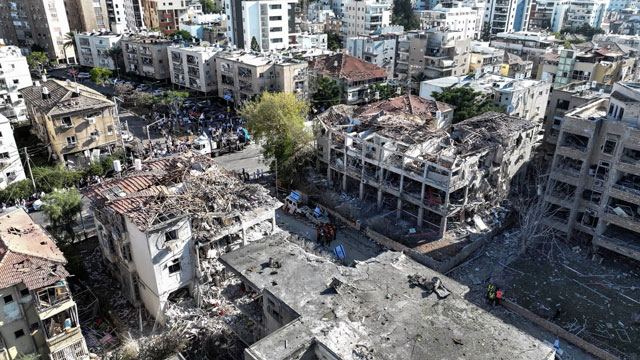
According to Azizi, Iran would attempt to “effectively confront the enemy and also change the calculation on the other side” through sustained missile attacks.
The assessment comes amid renewed diplomatic efforts between the United States and Iran over Tehran’s nuclear programme.
US President Donald Trump on Monday said there was a “very good chance” that Washington and Tehran could reach an agreement aimed at preventing Iran from obtaining nuclear weapons.
In a post on Truth Social, Trump said Gulf leaders had urged him to postpone planned military strikes against Iran, which he claimed were initially scheduled for Tuesday.
Trump stated that after discussions with Qatari Emir Tamim bin Hamad Al Thani, Saudi Crown Prince Mohammed bin Salman and UAE President Sheikh Mohamed bin Zayed Al Nahyan, he instructed US military officials to hold off on the operation.
He said “serious negotiations” were currently underway and expressed hope that a deal acceptable to the US and Middle Eastern nations could be reached.
Trump, however, warned that the US military had also been instructed to remain prepared for a “full, large-scale assault” if talks fail.
Experts noted that any future conflict could differ significantly from the war that reportedly began in February 2026.
Azizi said Iran had previously rationed its missile usage to prepare for a prolonged confrontation, but future fighting could involve rapid and concentrated attacks focused on defending key energy infrastructure.
He further warned that Iran may target Gulf oil fields, refineries and ports to disrupt the global economy and increase pressure on the United States and its allies.
According to the expert, Iran could also attempt to intensify pressure in strategic maritime zones such as the Bab al-Mandab Strait, in addition to the Strait of Hormuz, potentially widening the conflict across multiple shipping routes.
The Bab al-Mandab Strait, connecting the Red Sea with the Gulf of Aden and the Indian Ocean, remains a critical global trade route and has already witnessed attacks linked to Yemen’s Houthi movement in recent years.
Observers believe Gulf nations remain cautious about direct escalation due to concerns over regional instability and threats to energy infrastructure.