Daijiworld Media Network – New Delhi
New Delhi, May 14: The Delhi government is reviewing a major fire safety exemption framework that currently allows a large number of residential buildings in the national capital to obtain electricity connections without mandatory fire safety clearance.
Officials said the move comes in the wake of several fatal fire incidents and growing concerns over increasing electrical load and dense urban construction across Delhi.
Power Minister Ashish Sood said the government is examining whether the existing building height-based exemption system should be revised to strengthen fire safety compliance in residential areas.
Under the present Delhi Electricity Regulatory Commission (DERC) guidelines, residential buildings up to 17.5 metres with stilt parking and up to 15 metres without stilt parking can receive electricity connections without requiring a fire No Objection Certificate (NOC).
Officials said this exemption system has effectively kept nearly 95 per cent of residential buildings in Delhi outside mandatory fire safety certification requirements.
The existing framework is based on Delhi Fire Service rules, which classify buildings above 15 metres as high-rise structures requiring stricter fire safety measures and mandatory clearance. However, planning relaxations under the Delhi Master Plan permit buildings with stilt parking to reach 17.5 metres without being treated as high-rise for certain approvals.
Officials said this dual system has led to inconsistencies in enforcement, with electricity connection approvals becoming the primary checkpoint for determining fire safety compliance.
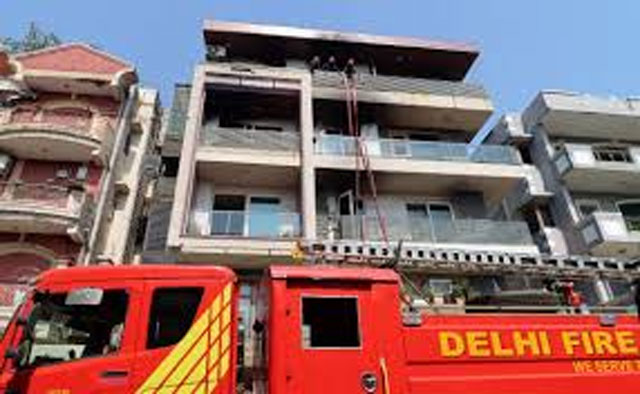
The review follows recent fire tragedies in Palam and Vivek Vihar that together claimed 18 lives within a little over a month. Authorities said the Vivek Vihar fire was reportedly triggered by an air-conditioner blast, while the Palam incident is suspected to have resulted from an electrical short circuit.
Officials also referred to earlier major incidents such as the 2022 Mundka fire and the 2019 Anaj Mandi blaze, which together killed over 60 people, highlighting recurring concerns over electrical faults, overcrowding and inadequate fire safety compliance.
Ashish Sood said many residential buildings currently escape fire NOC requirements despite rising risks associated with heavy use of electrical appliances, including air conditioners.
Officials added that electricity distribution companies frequently face disputes during field inspections, with applicants often challenging building height calculations used to determine eligibility for exemptions.
Under the Unified Building Bye-laws, building height is measured from the highest adjoining road level to the top structural slab, while rooftop structures such as water tanks, lift machine rooms, stair mumties, solar panels, parapet walls and chimneys are excluded from calculations.
Authorities said these exclusions often create confusion and complicate enforcement during inspections.
If approved, the revised proposal could bring a significantly larger number of residential buildings under mandatory fire safety scrutiny before electricity connections are granted, widening compliance coverage across the capital and reducing regulatory loopholes.