Daijiworld Media Network - Tehran
Tehran, Feb 26: Iran’s Foreign Minister Abbas Araghchi has termed India’s decision not to allocate funds this year for the strategically significant Chabahar Port project as a “disappointment” for both nations, describing the port as a “golden gateway” capable of transforming India’s connectivity with Central Asia and Europe.
In an exclusive interview, Araghchi said the absence of budgetary allocation was unfortunate for both Tehran and New Delhi.
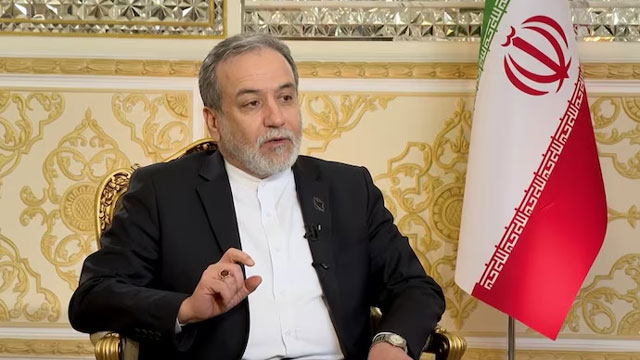
“Chabahar, as Prime Minister Modi once said, is a golden gate that connects the Indian Ocean area to Central Asia, the Caucasus, and then to Europe — and vice versa. It is a very strategic port. If fully developed, it can play a very important role in connecting India through Iran to Central Asia, to the Caucasus, and then to Europe,” he stated.
He expressed hope that the project would eventually see full development, calling it the “best transit route” for regional trade and connectivity.
The Chabahar Port project, located in Iran’s southeastern Sistan-Baluchestan province, is being developed by India to establish a direct trade and transit route to Afghanistan and Central Asia, bypassing Pakistan. The project is considered vital for enhancing India’s access to landlocked Central Asian markets, strengthening regional connectivity, and counterbalancing China’s presence at Pakistan’s Gwadar Port.
However, amid renewed tensions between the United States and Iran, India’s latest Union Budget marked the first time since the 2024 agreement to develop the port that no funds were earmarked for the project. In previous budgets, New Delhi had allocated ?100 crore annually for the initiative.
Last September, the United States imposed stringent economic sanctions on Iran, though India was granted a six-month exemption for its involvement in the Chabahar project. The waiver is set to expire on April 26.
Meanwhile, Ministry of External Affairs spokesperson Randhir Jaiswal recently confirmed that India is actively engaging with Washington regarding issues linked to Chabahar.
The development has sparked discussions in diplomatic circles, with observers noting that the future of the project may hinge on geopolitical negotiations and sanctions-related considerations.