Daijiworld Media Network - Washington
Washington, May 13: US President Donald Trump said Iran’s military capability had been “wiped out” and warned that Tehran would either agree to a deal or face further consequences, as he defended his administration’s approach to the ongoing West Asia conflict.
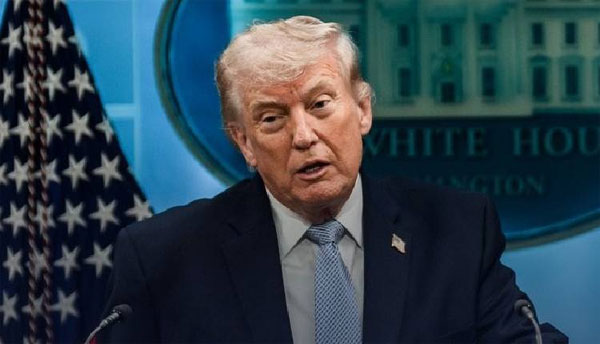
Speaking to reporters at the White House before boarding Marine One, Trump reiterated his position that Iran must not be allowed to develop nuclear weapons, calling it the most critical issue amid rising regional tensions.
“We’ll win it peacefully or otherwise,” he said, adding that Iran’s naval and air capabilities had been destroyed and claiming its military structure had been severely weakened.
Trump also asserted that the blockade around Iran was “100 per cent effective” and suggested that large volumes of oil currently held up in tankers would soon enter global markets once hostilities end.
He predicted a sharp decline in global crude prices after the conflict subsides, saying, “As soon as this war is over, you’re going to see oil prices drop. You’re going to see the stock market go through the roof.”
The President argued that inflation concerns linked to the conflict were overstated, claiming price pressures were temporary and would ease once energy markets stabilise. He maintained that inflation had been significantly lower before the escalation of tensions.
Reaffirming his stance, Trump said, “Iran cannot have a nuclear weapon. If Iran has one, the whole world is in trouble,” and insisted that Tehran had already suffered decisive military losses.
He also left open the possibility of diplomatic mediation, suggesting Chinese President Xi Jinping could potentially play a role, though he added that the United States did not require external assistance in dealing with Iran.
Trump further claimed that Pakistan’s leadership had been cooperative during the crisis, praising “the field marshal and the prime minister of Pakistan” without providing additional details.
In his remarks, he also criticised NATO, saying the alliance was unreliable and asserting that the United States did not depend on it.
The comments come amid heightened tensions in West Asia, where ongoing conflict and disruptions near the Strait of Hormuz have continued to affect global oil supply chains and energy market stability.