Daijiworld Media Network - New Delhi
New Delhi, Mar 24: Marking World Tuberculosis Day, India has announced the world’s first clinical study to scientifically evaluate Ayurveda as a complementary therapy alongside standard Anti-Tuberculosis Treatment (ATT).
The study is a joint initiative between the Department of Biotechnology and the Ministry of Ayush. It will enrol 1,250 newly diagnosed tuberculosis patients across eight institutions to assess the impact of Ayurveda when used alongside conventional treatment.
The research will focus on key health indicators such as body weight, nutrition, disease progression, quality of life, safety, and tolerability. It aims to provide scientific evidence on whether integrative approaches can improve recovery outcomes in TB patients.
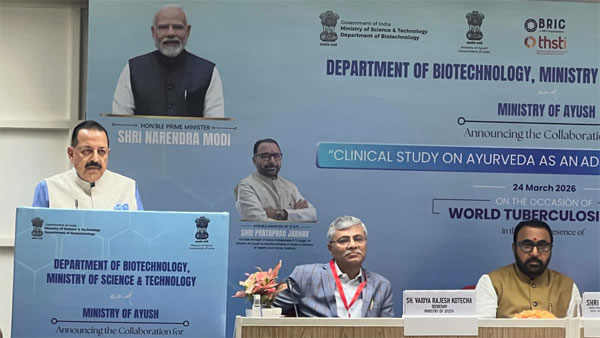
Union Minister of State for Science and Technology Jitendra Singh said the initiative reflects a “whole-of-science” and “whole-of-government” approach by combining modern biotechnology with traditional medicine systems.
Rabinarayan Acharya noted that the project has progressed through extensive consultations and protocol approvals, while Debasisa Mohanty highlighted that advanced tools such as DEXA scans, MRI, immune profiling, metabolomics, and single-cell RNA sequencing will be used to study the disease in depth.
India, which accounts for nearly 25% of the global tuberculosis burden, has seen a 21% decline in TB incidence over the past decade, reaching around 187 cases per 100,000 population in 2024. Quoting Narendra Modi, Singh said the progress reflects sustained national efforts toward eliminating TB.
Under the National TB Elimination Programme, the country has intensified early diagnosis, universal drug susceptibility testing, digital adherence technologies, and patient-centric care.
The study will also examine links between TB and conditions like diabetes, which can worsen each other, reinforcing the need for integrated treatment strategies. Additionally, initiatives like the RePORT India continue to generate critical data for global health policies, including guidelines by the World Health Organization.
This landmark study is expected to play a key role in shaping future TB treatment strategies, not only in India but globally.