Daijiworld Media Network - New Delhi
New Delhi, May 14: India’s transition toward electric public transport is expected to gather major momentum over the next decade, with electric buses projected to account for 35–40 per cent of annual bus sales by FY35, according to a new report released by KPMG India.
The report stated that electric vehicle penetration in the public bus transport segment could exceed 85 per cent by the same period, signalling a major shift in the country’s mobility ecosystem.
India’s bus industry, which has traditionally recorded annual sales of around 35,000 to 50,000 units, is now entering a transformative phase driven by electrification, government procurement schemes, and large-scale infrastructure investments.
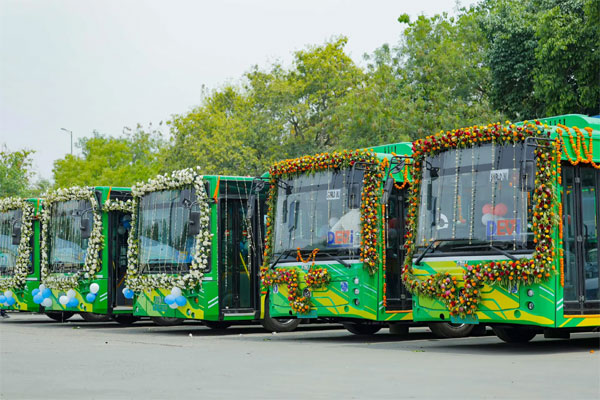
With buses contributing nearly 57 per cent of passenger-kilometres travelled across the country, the report noted that electrifying the segment will be critical to India’s clean mobility and carbon reduction goals.
Rohan Rao, Partner and Lead for Electric Mobility at KPMG India, said the country’s electric bus shift is no longer merely policy-driven but is evolving into a long-term structural transformation for the broader transport sector.
He highlighted that strong government procurement programmes, improving operating economics, and increasing investments in charging infrastructure have already accelerated momentum in the sector.
According to the report, future growth will depend heavily on building a scalable ecosystem supported by domestic manufacturing, innovative financing solutions, widespread charging networks, and operational efficiency across both public and private transport systems.
The study further observed that rapid urbanisation, rising travel demand, sustainability commitments, and government-backed clean mobility initiatives are collectively reshaping India’s bus industry.
Raghavan Viswanathan, Partner in Deal Advisory at KPMG India, said the next stage of growth in the electric bus ecosystem is expected to come not only from government transport corporations but also from private intercity operators, airport transport services, corporate mobility fleets, and app-based transportation platforms.
The report underlined the environmental benefits of electric buses, stating that they can deliver up to 70 per cent greater energy efficiency and substantially lower lifetime emissions compared to diesel-powered buses.
It also estimated that tenders issued under the PM-eBus Sewa scheme for around 6,600 buses could help save between one and two million tonnes of carbon dioxide emissions while reducing oil imports worth $2–3 billion during the concession period.
According to the findings, nearly 62,000 electric bus tenders have been floated across India so far, with approximately 46,000 buses already awarded under various central and state government programmes.
As of March 2026, around 16,300 electric buses were operational across the country, reflecting strong adoption momentum despite ongoing challenges in deployment and infrastructure expansion.
The report added that more than 90 per cent of India’s current electric bus deployments have been driven by public transport undertakings and government-backed tenders. India is expected to issue tenders for nearly 40,000 additional electric buses by FY30 through upcoming state and central government initiatives.