Daijiworld Media Network - Washington
Washington, Mar 2: Senior officials from the Trump administration are set to brief Congress on Tuesday, March 3, regarding recent US-led military strikes on Iran, amid partisan debate over the scope and legality of the operation.
White House spokesman Dylan Johnson confirmed that Secretary of State Marco Rubio, Defense Secretary Pete Hegseth, CIA Director John Ratcliffe, and Gen. Dan Caine will lead briefings for both chambers of Congress.
The administration has already engaged national security committees, with Pentagon officials providing bipartisan staffers a 90-minute briefing over the weekend.
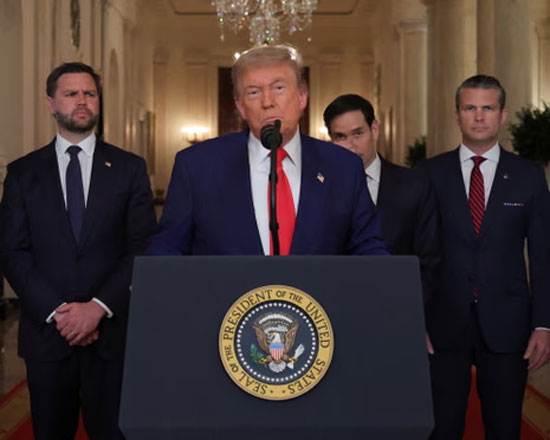
Reactions on Capitol Hill have split largely along party lines. Republican Senate Majority Leader John Thune praised the strikes, citing Iran’s nuclear program and support for terror groups as an “unacceptable threat.” In contrast, Democratic House Minority Leader Hakeem Jeffries criticised the operation for lacking congressional authorisation, warning that it left American forces exposed to potential Iranian retaliation.
While the White House has not released operational details, US and Israeli media reports provide context. The New York Times reported that Israeli and US intelligence coordinated a “three-wave attack” that targeted Iran’s high command and air defences, with Israeli officials claiming air superiority over Tehran. Former Israeli Air Force commander Amir Eshel reportedly said, “Iran right now is totally exposed to airstrikes,” noting “almost total freedom of maneuver.”
US forces are said to have targeted Iran’s naval fleet, with President Trump claiming that nine Iranian ships were destroyed or sunk, while additional strikes focused on dismantling Iran’s security apparatus, according to Washington Post. Reports indicate that at least four senior Iranian intelligence commanders were killed.
In retaliation, Iran launched strikes on Gulf state airports and critical infrastructure, leading to the cancellation of more than 3,400 flights across seven airports, including a temporary suspension at Dubai International Airport, according to Wall Street Journal.
The situation highlights ongoing tensions over war powers under the US Constitution, which grants Congress the authority to declare war, while presidents often rely on their commander-in-chief powers for limited military actions—a debate that has recurred in previous conflicts in Iraq, Libya, and Syria.