Only weeks ago, the harsh summer heat had reduced several stretches of the river to near-dry conditions. From the downstream side of the Jakribettu dam to the Panemangaluru new bridge, vast patches of sand and exposed rock formations had emerged as water levels receded alarmingly.
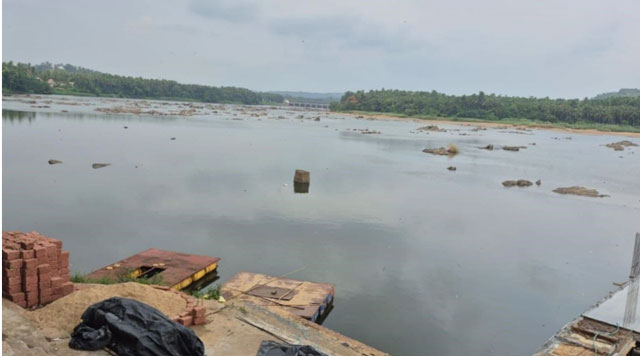
The sharp fall in inflow had triggered serious concern not only in Bantwal but also across areas under the Mangaluru City Corporation limits, with fears mounting over a potential shortage of drinking water for Mangaluru city.
Amid the worsening situation, Rajesh Nayak, MLA representing Bantwal, had directed officials to exercise utmost caution in the supply and consumption of drinking water.
The district administration too had stepped in with urgent measures to prevent a full-blown water crisis in Mangaluru.
The deputy commissioner’s office issued instructions to release water up to six metres from the AMR Dam towards the Thumbe Dam to ensure adequate storage during the peak summer period. Authorities were also instructed not to divert the remaining water stored in the AMR reservoir for any purpose other than drinking water needs.
Mangaluru city depends heavily on the vented dam at Thumbe across the Netravati river for its water supply. The dam has a maximum storage capacity of 10.41 million cubic metres (MCM).
According to official data recorded on April 21, 2026, the water level stood at 4.71 metres at Thumbe dam and 18.62 metres at AMR dam — enough to meet the city’s drinking water requirements for only about 22 days.
Rains bring relief
The situation, however, has changed dramatically over the last three to four days.
Steady rainfall across the Western Ghats and adjoining foothill regions has substantially increased inflow into the river system. In line with the district administration’s directions, water was also released from the Shambhoor AMR Dam, further rejuvenating the river.
The Jakribettu dam has now filled to capacity, with surplus water being released downstream. The Thumbe dam too has reached full levels, transforming the once-parched Netravati into a flowing, vibrant water body once again.
What was recently a riverbed dotted with exposed boulders and dry sandbanks has now turned into a fully replenished stretch of water, restoring both ecological balance and public confidence.
Fears of water scarcity recede
With adequate water now available in the river up to Thumbe, concerns over an immediate drinking water shortage have considerably eased. Officials and local residents believe that if rainfall continues for a few more days, the region is unlikely to face any major water scarcity even if the onset of the monsoon is delayed.
For now, the rains have brought much-needed respite — and with it, renewed life to the Netravati.