Daijiworld Media Network – New Delhi
New Delhi, Apr 26: Renowned Indian photographer and photojournalist Raghu Rai, known for capturing some of the most defining moments of the nation’s history, passed away in Delhi on Saturday. He was 83.
Rai’s journey into photography began unexpectedly in the 1960s during a visit to his brother, noted photographer S Paul, in Delhi. Initially trained as a civil engineer, he discovered his passion for the medium during this period. One of his early photographs, taken in a Haryana village, was published in The Times, London, marking the beginning of a career that spanned over five decades.
Widely regarded as one of India’s foremost photographers, Rai brought a deeply human perspective to his work, documenting life across social, political and cultural landscapes. In a 2024 interview, he had described himself as “an explorer of life,” reflecting his approach to photography beyond mere documentation.
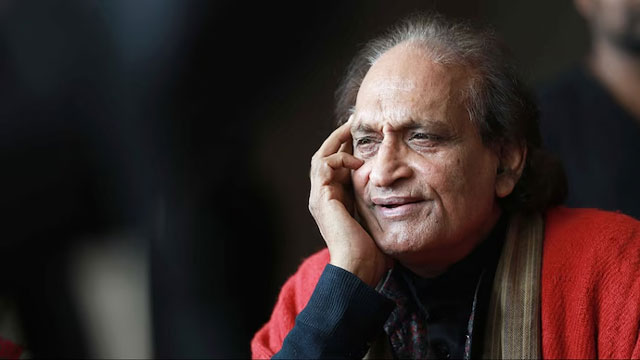
Over the years, Rai chronicled several landmark events in India’s history, including the Bangladesh Liberation War in 1971, the Emergency period, the Bhopal Gas Tragedy and the events surrounding Operation Blue Star in 1984. His work stood out for its depth, sensitivity and ability to capture the emotional pulse of the nation.
A recipient of the Padma Shri in 1972, Rai also made history in 1977 by becoming the first Indian photographer to join Magnum Photos, following a nomination by legendary French photographer Henri Cartier-Bresson.
His photographs ranged from powerful images of political figures to intimate portraits of cultural icons such as former Prime Minister Indira Gandhi, Ustad Bismillah Khan, the Dalai Lama, Mother Teresa, filmmaker Satyajit Ray and actor Aparna Sen.
Rai was also the author of several acclaimed books, including “Delhi”, “Raghu Rai’s India”, “Picturing Time” and “Tibet in Exile”, which reflected his enduring commitment to documenting India’s diverse realities.
Even in his later years, he remained actively engaged in photography, continuing to capture everyday life with the same curiosity and dedication that defined his early work.
Rai’s passing marks the end of an era in Indian photojournalism, leaving behind a vast visual archive that will continue to serve as a powerful record of the country’s contemporary history.