Daijiworld Media Network - Mumbai
Mumbai, Apr 1: A series of financial changes have come into force across India, led by a major overhaul of digital payment security, along with revisions in ATM usage, train ticket cancellations, credit card norms, and lending practices. The updates aim to enhance security, improve compliance, and streamline financial systems affecting everyday users.
A key change is the introduction of mandatory two-factor authentication (2FA) for UPI and card transactions, as directed by the Reserve Bank of India (RBI).
Entering a UPI PIN alone will no longer be sufficient to complete a transaction. Users must now undergo an additional verification step, which could include a one-time password (OTP), fingerprint authentication, or facial recognition. Transactions will be processed only after both layers of authentication are successfully completed.
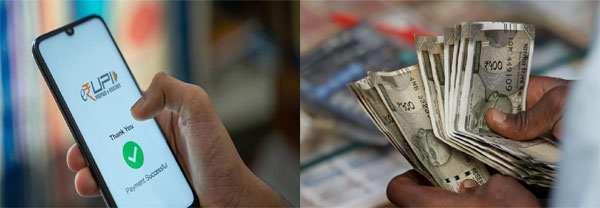
According to RBI guidelines issued on September 25, 2025, authentication must be based on at least two factors — something the user has, knows, or is. This may include a password, SMS-based OTP, passphrase, PIN, card hardware or software token, fingerprint, or other forms of biometric verification such as device-based or Aadhaar-based identification.
The move is expected to significantly reduce fraud risks, ensuring that even if a user’s PIN is compromised, unauthorised transactions cannot be completed. However, users may experience a slight delay in payments due to the additional step, whether for small purchases or larger transactions across platforms such as PhonePe, Google Pay and Paytm.
There is no change in UPI transaction limits. Users can continue to send up to Rs 1 lac per day for general transactions, while limits for hospital bills, education fees, and insurance payments remain at Rs 5 lac. For new users, the existing cap of Rs 5,000 within the first 24 hours continues as a precautionary measure.
ATM-related rules have also been revised. Some banks, including HDFC Bank, now count UPI-based cash withdrawals within the monthly free ATM transaction limit. Customers exceeding their quota will be charged Rs 23 per additional transaction. Bandhan Bank allows three free transactions per month in metro cities and five in non-metro areas, after which Rs 23 is charged per transaction, while failed transactions due to insufficient balance attract a penalty of Rs 25.
Punjab National Bank has reduced debit card withdrawal limits for select variants, with revised limits ranging between Rs 50,000 and Rs 75,000 depending on the card type.
Train cancellations
Indian Railways has tightened its ticket cancellation policy. Passengers cancelling tickets within eight hours of departure will receive no refund, compared to the earlier four-hour window. Cancellations made between eight and 24 hours before departure will incur a 50% deduction, while those made 24 to 72 hours in advance will see a 25% deduction. Standard charges continue to apply for cancellations made more than 72 hours prior.
The National Highways Authority of India (NHAI) has revised the FASTag annual pass fee from Rs 3,000 to Rs 3,075 for the 2026–27 financial year. The pass remains valid for one year from activation or up to 200 trips, whichever comes first.
PAN norms tightened
PAN-related norms have also been tightened. Applicants must now use updated forms and provide additional proof of date of birth. Quoting PAN has become mandatory for applying for credit cards, and existing cardholders must link their cards with their PAN, reinforcing its role in financial identification.
In another development, the RBI’s Lending Against Gold and Silver Collateral Directions, 2025 now permit banks and NBFCs to accept silver jewellery, ornaments, and coins as collateral for loans.
Credit card rules
Credit card users will also see changes. Axis Bank has revised the cashback structure for its Airtel Axis Bank Credit Card, linking rewards to base cycle earnings and discontinuing complimentary domestic airport lounge access. YES Bank has introduced charges on utility and transportation transactions beyond specified thresholds, with fees capped at Rs 5,000 per transaction.
New labour codes
Additionally, new labour codes expected to be implemented during the financial year may impact take-home salaries. Under the revised definition of wages, employers must allocate at least 50% of total salary as the basic component, potentially reducing take-home pay while increasing long-term benefits.
Users are advised to update their apps, enable biometric authentication, and avoid sharing sensitive details such as PINs or OTPs, even as enhanced safeguards come into effect.