Daijiworld Media Network - New Delhi
New Delhi, Mar 24: Union minister Nitin Gadkari on Tuesday said India’s toll collection is expected to surge significantly in the coming years, driven by expanding road infrastructure, rising vehicle usage, and the adoption of advanced digital technologies.
Speaking at an event, Gadkari projected that annual toll revenue could rise to Rs 3.5–4 trillion in the near future, a sharp increase from the current Rs 80,000–85,000 crore. He noted that economic growth and expansion in the automobile sector are leading to increased highway traffic, which in turn boosts toll collections.
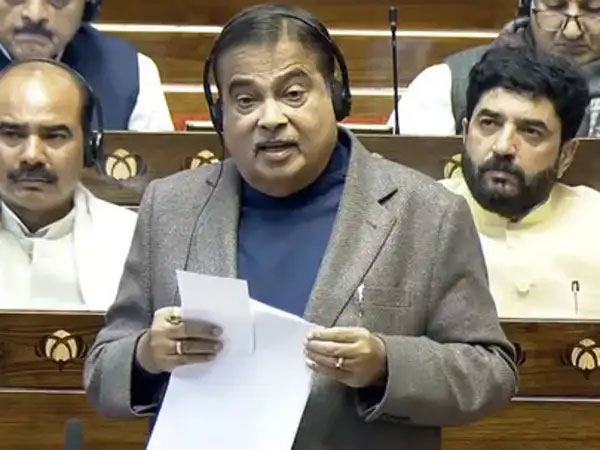
The minister emphasised that India is transitioning towards a fully digital, barrier-free tolling system. Plans are underway to implement a multi-lane free-flow system powered by artificial intelligence, eliminating the need for physical toll plazas. This transition is expected to be completed by the end of 2026.
According to Gadkari, the adoption of such technologies is already helping save around Rs 8,500 crore in toll collection costs. Work on this transformation has begun, with tenders awarded for 10 toll plazas and more projects in the pipeline.
He was speaking at the listing ceremony of National Highways Authority of India-backed Raajmarg Infra Investment Trust (RIIT), whose Rs 6,000-crore initial public offering saw strong investor interest, being oversubscribed nearly 14 times.
On infrastructure financing, Gadkari highlighted India’s potential to monetise road assets but pointed out that execution speed remains a challenge. He said that with improved implementation, the country could achieve annual infrastructure investments of Rs 8–8.5 trillion through a mix of government funding and market-based asset monetisation.
He added that by the end of 2026, assets worth Rs 3.5 trillion are expected to be placed under InvITs. The National Highways Authority of India has already monetised assets worth about Rs 1.5 trillion over the past four years and plans to continue this approach, while retaining at least a 10 percent stake in RIIT.