Daijiworld Media Network - New Delhi
New Delhi, Mar 10: A shortage of commercial LPG cylinders has begun disrupting operations in hotels and restaurants across several Indian cities, with industry bodies warning that many establishments may shut down if supplies are not restored soon.
Hospitality associations in cities such as Bengaluru, Mumbai and Chennai, as well as across Tamil Nadu, have reported severe shortages of commercial cooking gas. The disruption in supply comes amid the escalating conflict in West Asia, which has affected energy shipments and forced the government to prioritise LPG supply for households.
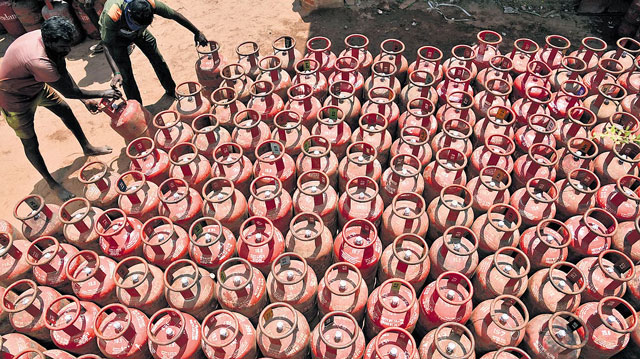
The Centre has directed oil refineries to increase liquefied petroleum gas (LPG) production in an attempt to address the situation.
The shortage has also been accompanied by a rise in LPG prices. Last Saturday, the price of domestic LPG cylinders was increased by Rs 60, while commercial cylinders became costlier by Rs 115.
The price increase comes as the Iran-Israel-US conflict has disrupted shipping routes in the region, including the Strait of Hormuz, a key global energy chokepoint.
Mumbai’s hospitality sector has already been significantly affected by the shortage. According to the hotel and restaurant association AHAR, nearly 20 per cent of hotels and restaurants in the city have already shut operations.
The association warned that if supplies are not restored soon, up to 50 per cent of hotels in Mumbai could shut down within the next two days.
In Bengaluru, the hotel industry has also raised concerns about the halt in LPG supplies. The Bangalore Hotels Association earlier warned that operations across the city could be affected starting March 10.
Some hotel owners said they are currently operating with limited stocks of cylinders. Many establishments have reduced the number of dishes on their menus in order to conserve gas and extend their available supplies.
Restaurants across Tamil Nadu are also facing difficulties as existing LPG stocks are expected to last only one or two more days. Hoteliers said several establishments have already reduced the number of food items offered to control gas consumption.
In Chennai, some restaurants have displayed notices informing customers that menu options have been reduced due to the shortage of commercial LPG cylinders.
The supply crunch has forced the government to prioritise LPG distribution for households. India consumes about 31.3 million tonnes of LPG annually, of which nearly 87 per cent is used in homes while the remaining portion is consumed by commercial establishments such as hotels and restaurants. Around 62 per cent of the country’s LPG demand is met through imports.
A large share of these imports—around 85 to 90 per cent—traditionally arrives through the Strait of Hormuz from countries such as Saudi Arabia. However, the ongoing conflict and retaliatory strikes involving the United States, Israel and Iran have disrupted shipping through this critical route.
With imports affected, the government has chosen to ensure uninterrupted supply for domestic consumers first, leaving commercial users facing shortages.
Following the Centre’s directive, state-run oil marketing companies including Indian Oil Corporation Limited, Bharat Petroleum Corporation Limited and Hindustan Petroleum Corporation Limited said they are taking steps to increase LPG production and prioritise supply for households and essential sectors.
The government has also ordered refineries to divert their entire output of propane, butane, propylene and butene for LPG production. Domestic producers have been directed to supply all LPG output to IOCL, BPCL and HPCL, which together supply more than 99 per cent of India’s domestic LPG.
Officials warned that any violation of the order could invite action under the Essential Commodities Act, 1955, and the Petroleum Products (Maintenance of Production, Storage and Supply) Order, 1999.
The Ministry of Petroleum and Natural Gas has also formed a committee to monitor supply issues after the sudden shortage alarmed the hospitality sector.
To prevent panic buying and hoarding, oil marketing companies have extended the minimum gap between LPG cylinder refills to 25 days from the earlier 21 days.
Imported LPG supplies for non-domestic use are currently being prioritised for essential sectors such as hospitals and educational institutions.
The government has also revised the priority list for allocation of domestically produced natural gas. Under the new order, LPG production has been placed alongside compressed natural gas (CNG) and piped cooking gas (PNG) at the top of the priority list.
The fertiliser sector has been placed second, while industries such as tea manufacturing and other industrial users will receive about 80 per cent of their average gas consumption, subject to availability.
Gas supplies to petrochemical plants, power units and other high-priced consumers may be curtailed to ensure availability for priority sectors.
Meanwhile, the Gujarat government has announced a 50 per cent reduction in gas supply for industrial use to conserve fuel amid global supply disruptions. State Energy Minister Rushikesh Patel said domestic LPG supply remains unaffected and authorities are coordinating with the Centre to ensure households do not face shortages.
In Odisha, the Hotel and Restaurant Association of Odisha has written to Union Petroleum Minister Hardeep Singh Puri seeking intervention to restore the smooth supply of commercial LPG cylinders.
In its memorandum, the association warned that the sudden disruption has severely affected food preparation and service in many establishments and could lead to hotel closures, cancellation of bookings and inconvenience to tourists if the situation continues.