Daijiworld Media Network - Tehran
Tehran, Mar 4: A ceremony commemorating Iran’s late Supreme Leader Ayatollah Ali Khamenei has been postponed, according to Iran’s Tasnim news agency, days after he was assassinated along with family members in joint air strikes by Israel and the United States.
The agency quoted an official citing logistical issues for the delay, including requests from people in different provinces wishing to attend the ceremony. Funeral arrangements are ongoing and are expected to draw massive crowds, raising concerns over potential security threats amid continuing hostilities.
Earlier, Hojjatoleslam Mahmoudi, head of Iran’s Islamic Propagation Council, had announced that the farewell ceremony would begin at 10 pm local time at Tehran’s Imam Khomeini Prayer Hall and continue for three days.
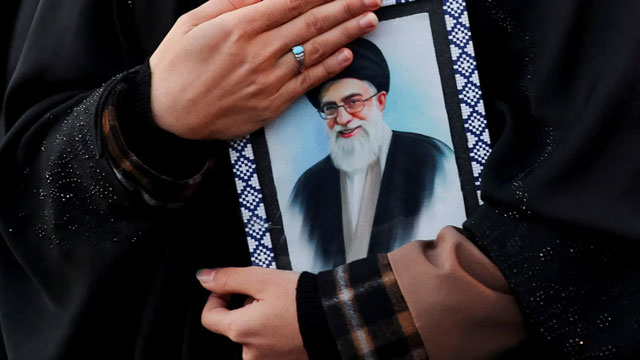
“The prayer hall will be receiving visitors and the dear people can attend and take part in the farewell ceremony and mark a strong presence once again,” Mahmoudi was quoted as saying by Iranian media.
Khamenei, who was 86, had served as Iran’s supreme leader since 1989, succeeding Ruhollah Khomeini, the architect of Iran’s 1979 Islamic Revolution. The supreme leader wields ultimate authority over the government, military and judiciary, while also serving as the country’s highest religious authority.
Senior cleric Ahmad Khatami, a member of both the Guardian Council and the Assembly of Experts, said the country was close to identifying Khamenei’s successor.
“The Supreme Leader will be identified at the closest opportunity. We are close to a conclusion; however, the situation in the country is a war situation,” Khatami told state television.
Under Iran’s constitution, the 88-member Assembly of Experts is responsible for appointing the supreme leader. Members are elected every eight years, but candidates must first be vetted by the Guardian Council. A simple majority vote is sufficient to select the new leader, who must be a senior jurist with expertise in Shia Islamic jurisprudence and possess political judgement and administrative capability.
Khamenei’s second son, Mojtaba Khamenei, is reported to be among the leading contenders to succeed him. Two Iranian sources cited by Reuters said Mojtaba survived the recent US-Israeli strikes.
Meanwhile, Israel’s Defence Minister Israel Katz warned that any future Iranian leader continuing hostile policies would be targeted.
“Any leader selected by the Iranian regime to continue leading the plan for Israel’s destruction and threatening the United States and the region will be a certain target for assassination, no matter his name or where he hides,” Katz said in a post on X.
US President Donald Trump also commented on the leadership transition in Iran, stating during an Oval Office appearance that the “worst-case scenario” would be another leader unfriendly to US priorities.
Luciano Zaccara, research associate professor in Gulf politics at Qatar University, told Al Jazeera that Iran’s political structure had long prepared for such a scenario.
“The structures remain, the line of power and the line of command remain in place,” he said.
The postponement of the ceremony comes as Tehran braces for both an outpouring of public mourning and heightened security challenges amid ongoing regional tensions.