Daijiworld Media Network – New Delhi
New Delhi, Jan 13: In a significant development, the Supreme Court on Tuesday delivered a split verdict on the constitutional validity of Section 17A of the Prevention of Corruption (PC) Act, 1988, which mandates prior government approval before initiating a corruption probe against public servants.
The verdict was delivered by a two-judge Bench comprising Justice B V Nagarathna and Justice K V Viswanathan while hearing a writ petition filed by the Centre for Public Interest Litigation (CPIL), which challenged the 2018 amendments to the anti-graft law.
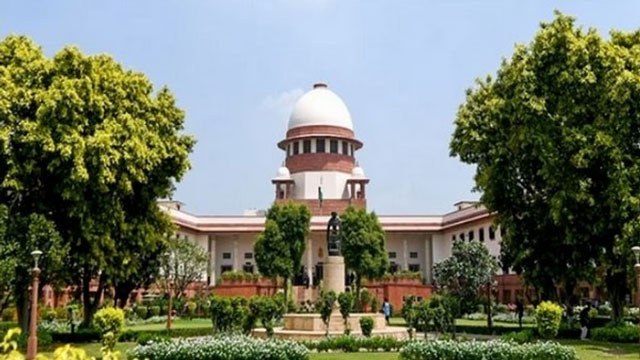
While Justice Nagarathna struck down Section 17A as unconstitutional, Justice Viswanathan upheld the provision, subject to safeguards. Owing to the divergent views, the matter will now be placed before Chief Justice Surya Kant for constitution of a larger Bench.
Justice Nagarathna, in her judgment, observed that Section 17A was an attempt to shield corrupt officials and ran contrary to the very objective of the PC Act. She held that no prior approval should be required to initiate an investigation and said the provision sought to revive safeguards that had already been struck down by the apex court in the Vineet Narain and Subramanian Swamy cases.
“The requirement of prior sanction forecloses inquiry and protects the corrupt rather than safeguarding honest officers who do not require such protection,” she noted, declaring the provision unconstitutional.
On the other hand, Justice Viswanathan held that Section 17A was constitutionally valid if the power to grant sanction was vested with an independent authority. Reading down the provision, he ruled that the decision on prior approval must be taken by the Lokpal at the Centre or the Lokayukta at the state level, and not by the executive.
Striking down the provision altogether would amount to “throwing the baby out with the bath water,” Justice Viswanathan observed, warning that absence of protection against frivolous complaints could lead to policy paralysis. He stressed the need to strike a balance between protecting honest public servants and ensuring accountability in public office.
The court had reserved its verdict on August 6, 2025, after extensive hearings. During arguments, senior advocate Prashant Bhushan, appearing for CPIL, contended that Section 17A reintroduced executive control over corruption probes and suffered from an inherent conflict of interest, as ministers or officials involved in decisions could influence whether an investigation is initiated.
With the split verdict, the constitutional fate of Section 17A will now be decided by a larger Bench of the Supreme Court.