Daijiworld Media Network - Washington
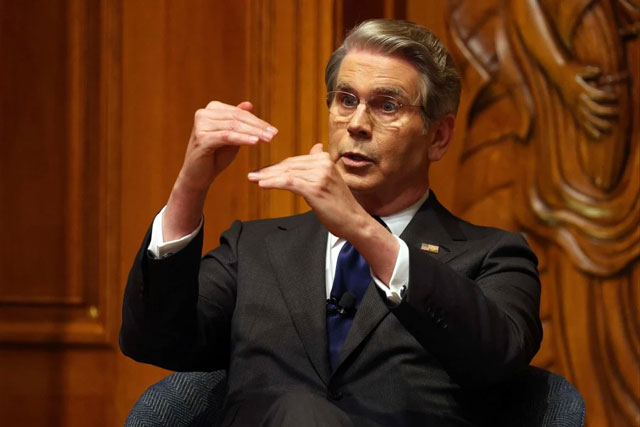
Washington, Mar 23: The United States may need to intensify its military campaign against Iran in order to eventually wind down the conflict, Scott Bessent said, amid mixed signals from Donald Trump on the war strategy.
Speaking in an interview, Bessent said escalation and de-escalation were not contradictory. “Sometimes you have to escalate to de-escalate. This is the only language the Iranians understand,” he said.
His remarks come after Trump warned of “obliterating” Iranian energy infrastructure if Tehran fails to reopen the Strait of Hormuz, a key shipping lane that carries around one-fifth of global oil and gas supplies. The threat followed his earlier statement that US objectives were “very close” and that he was considering winding down the war.
Rising tensions in the region have pushed global energy prices higher, with disruptions in the Strait impacting supply chains worldwide.
In a bid to stabilise markets, Bessent said the US has temporarily lifted sanctions on Iranian and Russian oil already loaded onto ships. The move, however, has drawn criticism for potentially benefiting Iran financially during the ongoing conflict.
Defending the decision, Bessent argued that the oil would have been sold regardless, mainly to China, and that moderating prices would ultimately limit Iran’s gains while easing pressure on US allies.
He declined to provide a clear timeline on when fuel prices might stabilise, stating it could take anywhere from weeks to months. However, he maintained that long-term regional stability and curbing Iran’s nuclear capabilities would outweigh short-term economic strain.
Meanwhile, Reza Pahlavi, son of Iran’s last shah, urged both the US and Israel to avoid targeting civilian infrastructure, warning that such assets belong to the Iranian people and the country’s future.