Daijiworld Media Network - Tehran
Tehran, May 31: Despite US President Donald Trump claiming that a naval blockade on Iran had been lifted, Iranian vessels continue to face restrictions in the Strait of Hormuz, according to reports from the semi-official Tasnim news agency.
Citing Iranian sailors, the report said ships are still being warned by US Central Command against entering certain areas, and that operational restrictions remain in effect in the strategic waterway.
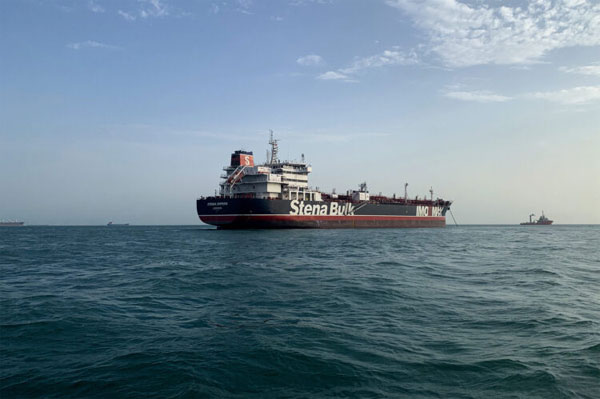
Trump had earlier stated on his Truth Social platform that the naval blockade “will now be lifted,” while also outlining conditions for a potential agreement with Tehran. He reiterated that Iran must not acquire nuclear weapons and called for the Strait of Hormuz to remain fully open for unrestricted maritime traffic.
He further suggested that Iranian enriched uranium stockpiles should be located in coordination with Iran and the International Atomic Energy Agency and subsequently destroyed as part of a broader agreement framework.
Iranian authorities, however, have maintained that nuclear-related discussions are not part of the current stage of negotiations. The Khatam al-Anbiya Central Headquarters, Iran’s top military command, said the armed forces retain full authority over operations in the Strait of Hormuz and that all vessels must comply with Iranian-designated maritime routes and obtain clearance from the Islamic Revolutionary Guard Corps (IRGC) Navy.
The IRGC Navy also claimed that around 20 vessels were permitted to pass through the strait within a 24-hour period, coordinating with Iranian maritime authorities. Officials said these approvals were granted based on commercial needs, including the transport of essential goods such as chemical fertilizers.
Iran had earlier tightened its control over the strait following joint strikes on Iranian territory, restricting passage for vessels linked to the United States and Israel. Meanwhile, US naval forces continue to maintain their own operational restrictions in the region, reflecting ongoing tensions over one of the world’s most critical maritime chokepoints.