Daijiworld Media Network - Washington
Washington, May 8: Fresh tensions erupted in the Middle East after the United States and Iran exchanged fire near the Strait of Hormuz, raising fears over the stability of the month-old ceasefire between the two nations.
US President Donald Trump claimed that American naval forces destroyed Iranian attackers targeting three US Navy destroyers passing through the strategic waterway and warned Tehran of harsher retaliation if it fails to sign a deal with Washington soon.
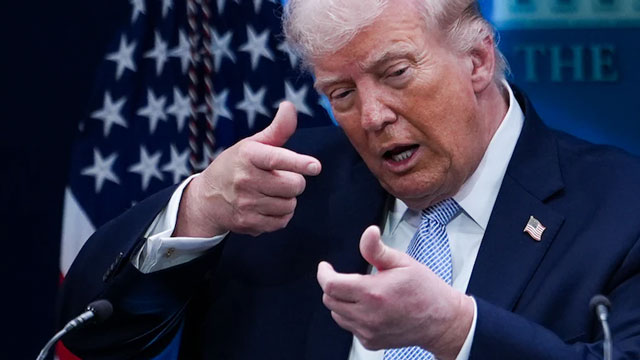
In a post on Truth Social, Trump said the US destroyers successfully crossed the Strait of Hormuz despite coming under attack.
“There was no damage done to the three destroyers, but great damage done to the Iranian attackers,” Trump said, adding that several Iranian boats were also destroyed.
He further warned that the US would respond “a lot harder and a lot more violently” if Iran refuses to finalise an agreement with Washington.
Iran, however, accused the US of initiating aggression by targeting two vessels near the Strait of Hormuz and carrying out air strikes on civilian areas along the southern coast, including Bandar Khamir, Sirik and Qeshm Island.
A spokesperson for Iran’s Khatam al-Anbiya Central Headquarters alleged that the attacks were conducted with the cooperation of certain regional countries.
Amid the escalating rhetoric, Iranian Foreign Ministry spokesperson Esmaeil Baqaei issued a sharp warning, comparing Iran to an angry lion.
“If you see the lion’s fangs protruding, do not imagine that the lion is smiling,” he wrote on social media.
Baqaei also described Iran as a “superpower” and called on Gulf nations to reduce dependence on the US military presence in the region, claiming it has become a liability rather than a source of security.
Despite the latest confrontation, Trump insisted that the ceasefire remains intact, describing the exchange during an interview with ABC News as merely a “love tap”.
“It’s just a love tap... the ceasefire is going. It’s in effect,” he said.
The renewed hostilities have once again intensified concerns over the security of the Strait of Hormuz, one of the world’s most crucial oil shipping routes through which nearly one-fifth of global oil supplies pass.
Meanwhile, regional tensions have also spread to neighbouring Gulf countries. The UAE claimed it faced missile and drone attacks from Iran, terming the strikes a dangerous escalation and a direct threat to regional stability.
Earlier this week, an attack on an energy installation in Fujairah reportedly injured three Indian nationals. Separate incidents along the coastline near Oman also left civilians injured after residential structures were hit.
With both Washington and Tehran continuing to exchange threats, uncertainty remains over whether diplomatic negotiations can prevent the conflict from escalating further across the Gulf region.