Daijiworld Media Network - Panaji
Panaji, Mar 30: An instance of unauthorised hill-cutting near the Old Goa–Bainguinim border has sparked concern among conservationists over threats to Fonte de Santo Antonio, a centuries-old spring once central to the region’s water supply.
The spring, praised by 17th-century French traveller François Pyrard de Laval for its “pure and limpid water,” historically supplied water to Old Goa, then the capital city. Today, however, it lies in a degraded state amid increasing development pressures in surrounding green buffer zones.
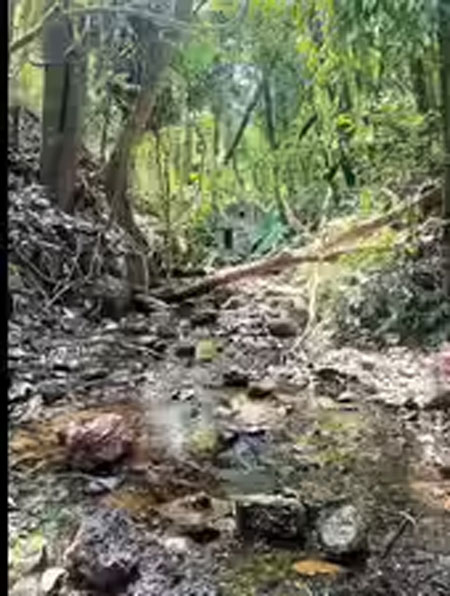
According to local authorities, a recent inspection by the Old Goa panchayat found that a project promoter had illegally constructed a 105-metre retaining wall below an excavated slope within the spring’s catchment area. Activists warn that such activity could trigger landslides and further damage the fragile ecosystem.
Environmentalists also pointed to blocked access routes, overgrown pathways, and silted water channels flowing from the spring towards the Mandovi River. Large quantities of mud allegedly dumped into the stream have worsened the situation, raising concerns over flooding during monsoon.
Experts caution that unregulated construction, especially multi-dwelling units on slopes, could contaminate groundwater through inadequate sewage systems. Geologists warn that seepage from septic tanks may eventually affect the water quality of the spring.
Heritage enthusiasts say the site holds significant tourism potential if preserved, noting its scenic surroundings and historical importance. However, they stress that urgent mapping and protection of watershed areas are essential to prevent irreversible damage.
Urban planners and researchers have also highlighted that large-scale construction and land alteration in Old Goa have already disrupted natural drainage patterns, increasing water flow into low-lying areas.
While some remedial steps have been initiated by authorities, activists maintain that stronger enforcement and conservation efforts are needed to safeguard the region’s hydrological and cultural heritage.