Daijiworld Media Network - New Delhi
New Delhi, Mar 25: India on Wednesday strongly criticised Pakistan for its remarks supporting a banned organisation and its members, asserting that Islamabad has no authority to comment on India’s internal matters or judicial decisions.
The sharp response came after Pakistan’s Foreign Office reacted to a Delhi court sentencing Kashmiri separatist leader Asiya Andrabi to life imprisonment. Responding to the statement, Randhir Jaiswal, spokesperson of the Ministry of External Affairs, said India “categorically rejects” Pakistan’s remarks.
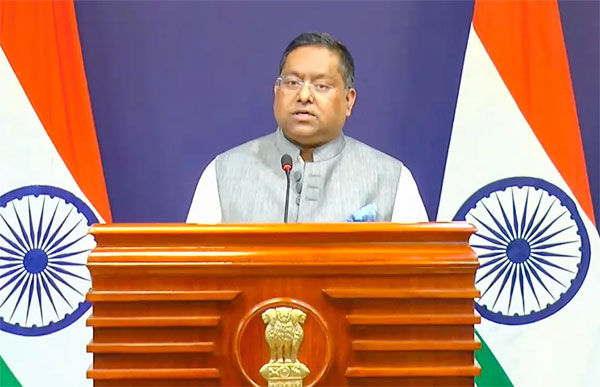
He added that such statements were unsurprising given Pakistan’s history, accusing it of backing terrorism and condoning violence. “Instead of spreading false narratives, Pakistan should introspect on its own record of systematic human rights violations,” the spokesperson said.
On Tuesday, a Delhi court sentenced Andrabi to life imprisonment for charges including conspiracy to commit terrorist acts and waging war against the Government of India. Her associates, Sofi Fehmeeda and Nahida Nasreen, were each awarded 30-year prison terms.
Delivering the verdict, Additional Sessions Judge Chander Jit Singh of the Karkardooma Courts observed that the actions of the convicts posed a threat to the nation’s integrity and were aimed at promoting the secession of Jammu and Kashmir, which the court described as an integral part of India.
The court noted that while their actions may not have directly incited violence, they contributed to radicalising minds—especially among youth—by promoting narratives that could lead to extremist activities. It also stated that the accused had glorified militants and supported separatist ideology.
The case stems from a 2018 probe by the National Investigation Agency, which alleged that the banned outfit Dukhtaran-e-Millat, led by Andrabi, used social media, speeches, and other platforms to advocate for Kashmir’s merger with Pakistan.
According to the prosecution, evidence included videos and online material showing the accused encouraging unlawful activities such as stone-pelting and promoting extremist narratives. Andrabi was convicted under multiple provisions of the Unlawful Activities (Prevention) Act, along with charges under the Indian Penal Code, including criminal conspiracy and waging war against the state.
Rejecting any leniency, the court emphasised that activities aimed at destabilising the country and promoting secessionist ideologies warranted strict punishment. Andrabi, who founded the all-women separatist group in 1987, was arrested in April 2018, after which the organisation largely became inactive.