Daijiworld Media Network - New Delhi
New Delhi, Mar 25: The Strait of Hormuz, a vital artery through which nearly 20 per cent of the world’s oil and gas flows, remains neither fully open nor officially closed, creating a high-risk bottleneck that is disrupting global energy markets amid the ongoing Iran war.
Shipping through the narrow 33-km-wide strait has slowed to a trickle, with costs and uncertainty rising sharply. Oil prices have surged by over 40 per cent, while natural gas prices have also hit peaks, reflecting the economic fallout of a conflict involving the United States, Israel, and Iran.
Since the war began on February 28, Iran has tightened control over the passage, not by shutting it entirely but by regulating access. Reports indicate that around 20 vessels attempting to cross without permission have been attacked. Tehran has warned that only “non-enemy” nations will be allowed safe passage, though it has not clearly defined its adversaries.
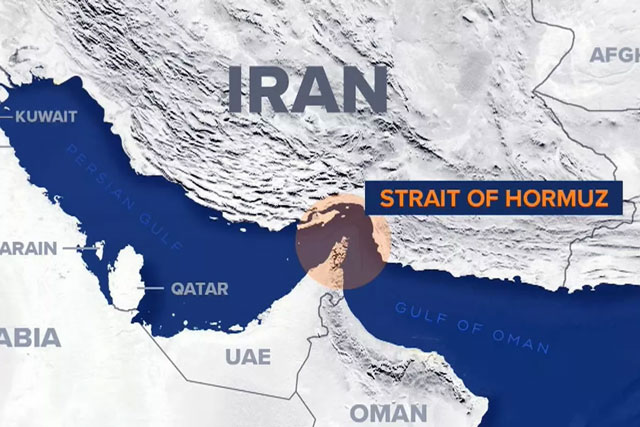
According to shipping analytics firm Kpler, only 138 vessels, including 87 oil and gas tankers, crossed the strait in March so far—down from 138-140 ships daily before the conflict. This marks a staggering 95 per cent drop in traffic. Meanwhile, nearly 2,000 vessels are currently stranded near the waterway, as per the International Maritime Organization.
A limited number of countries have managed to secure passage, with most shipments heading towards Asia, particularly China. Over 12 million barrels of crude have reportedly reached China since the conflict began. Some tankers have even declared Chinese links to ensure safe transit. A few vessels bound for India, Pakistan, and Turkey have also been permitted through.
Passage through the strait has become increasingly complex and dangerous, with threats from drones, missiles, and underwater mines. Iran’s strategic geography allows it to monitor and target vessels effectively. Earlier, some ships attempted to evade detection by switching off their Automatic Identification System (AIS), but the practice declined after a deadly attack on a US-linked tanker.
Reports suggest that Iran has introduced a controlled transit mechanism, allegedly overseen by the Islamic Revolutionary Guard Corps (IRGC). Ships are required to submit detailed documentation through intermediaries for clearance. Though Iran has denied imposing transit fees, analysts claim charges of up to $2 million per tanker may be levied, with payments reportedly made in Chinese yuan.
Insurance costs have surged dramatically due to the heightened risks. War-risk premiums have jumped from 0.25 per cent to as high as 3–7.5 per cent, pushing insurance expenses for large oil tankers from around $600,000 to as much as $7–9 million per voyage.
Despite technically remaining open, the Strait of Hormuz has effectively become a tightly controlled and highly volatile corridor, with global trade and energy markets bearing the brunt of the ongoing conflict.