Media Release
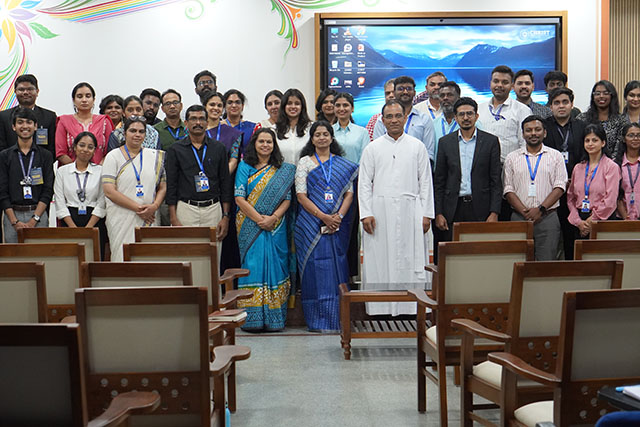
Bengaluru, Mar 14: The National Seminar on GST Reforms, Livelihoods, and Employment Dynamics in Southern India: Implications for Vision Viksit Bharat held at CHRIST (Deemed to be University), Bannerghatta Road Campus, on March 13 brought together academicians, policymakers, and students to deliberate on the evolving role of the Goods and Services Tax in shaping India’s economic landscape.
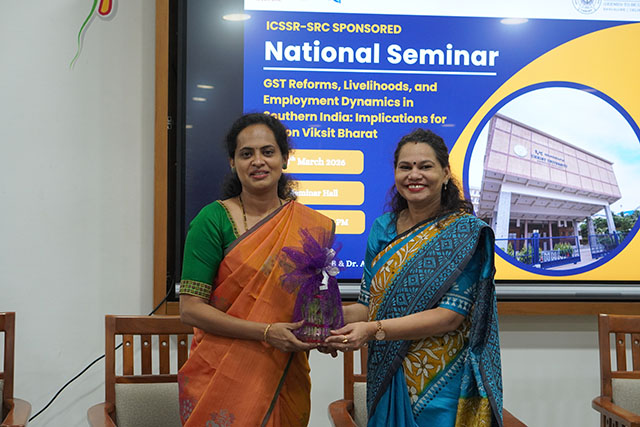
After the introduction of the theme by the seminar convenor, and opening remarks by the university‘s administration, the highlight was the inaugural address by Dr Rashmi, an officer of the Indian Revenue Service. Addressing the gathering, she stressed the importance of tax compliance in strengthening governance and national development. “For a government to function effectively and respond to national challenges, it requires not only political stability but also a strong and responsible tax base,” she noted, urging young economists and future entrepreneurs to recognise their role as responsible and compliant citizens.


Reflecting on the evolution of India’s tax structure, Dr Rashmi observed that technological reforms and the expansion of the GST framework have significantly widened the tax base. She described GST as “a natural culmination in India’s journey toward a modern and progressive taxation system,” aligning the country with global fiscal practices. “Research must move beyond surface-level analysis and identify real implementation challenges that can strengthen tax reforms,” she remarked.
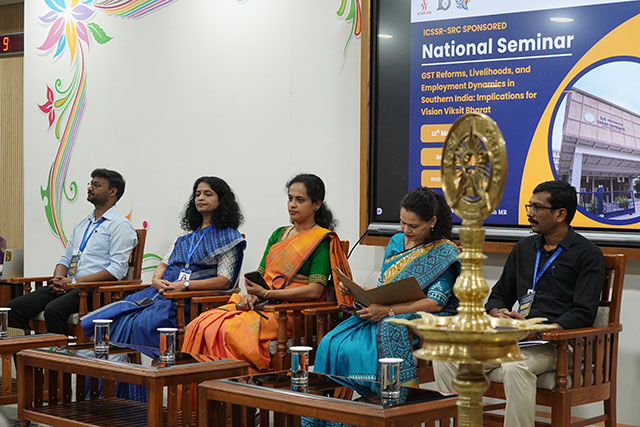
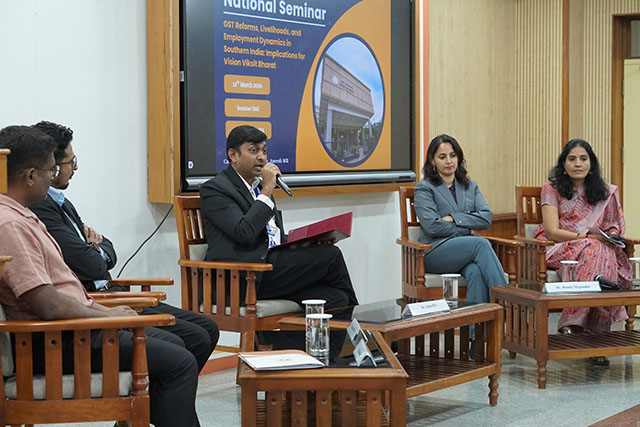
The seminar featured one panel discussion and three plenary sessions of paper presentations, providing a platform for scholars and practitioners to examine the fiscal, institutional, and labour market implications of GST reforms.
Macroeconomist Dr Rumki Majumdar emphasised the macroeconomic logic behind GST rationalisation and its role in stimulating domestic demand. She explained that reducing GST rates on several goods was a strategic move to boost consumption and investment, particularly in the context of global trade uncertainties. By lowering prices and encouraging spending during the festive season, the reform helped stimulate market activity and expand the tax base. “When tax rates fall, consumption rises, businesses invest more, and the tax base broadens, strengthening the economy in the long run,” she noted, highlighting the role of GST reforms in supporting India’s growth trajectory.
Providing a detailed perspective on public finance, Dr Ramanjini examined the implications of GST reforms for state finances, particularly in Karnataka. He pointed out that GST contributes nearly 43 per cent of the state’s tax revenue, making it a critical component of fiscal stability. However, he cautioned that rate rationalisation and structural changes in the GST framework could create short-term revenue pressures for states already facing rising committed expenditures such as salaries, pensions, and welfare commitments. “GST remains the backbone of state tax revenue, and any reduction in rates inevitably affects the fiscal space available to governments,” he remarked.
Expanding the discussion to the broader fiscal federalism framework, Dr Rajeshwari U R analysed the structural implications of GST reforms for southern states. She noted that the rationalisation of GST slabs, from multiple rates to a simplified structure, has improved tax administration but also generated concerns about revenue losses for high-contributing states. According to her, manufacturing-intensive states in southern India could experience short-term fiscal stress as lower tax rates reduce immediate revenue inflows. “GST rationalisation simplifies the system, but the short-term fiscal burden on states, especially in the South, remains a significant policy concern,” she observed.
Dr Muhammed Riyas focused on the relationship between GST reforms and employment dynamics. He highlighted that while GST has improved tax buoyancy and formalisation, the transition has posed challenges for micro, small, and medium enterprises (MSMEs) and informal supply chains. Delays in input tax credits and compliance costs, he noted, can strain the working capital of smaller enterprises. “Structural reforms like GST must move towards inclusive formalisation so that the transition does not marginalise small producers and informal workers,” he emphasised, urging policymakers to consider institutional and ground-level challenges.
The discussion collectively highlighted the multidimensional nature of GST reforms, examining their macroeconomic benefits alongside fiscal and institutional challenges.