Daijiworld Media Network - Jerusalem
Jerusalem, Dec 24: As a turbulent year draws to a close, the Middle East is entering another phase of heightened strategic tension, with the risk of a wider, multi-theatre conflict growing steadily. Despite temporary ceasefire arrangements across parts of the region, underlying disputes remain unresolved, and rival actors continue to pursue sharply opposing objectives.
The region is currently entangled in a complex web of state and non-state players, including Israel, Iran, Lebanon, Iraq and Yemen, alongside armed groups such as Hezbollah, Hamas, the Houthis and factions of Iraq’s Popular Mobilization Forces. Analysts caution that the existing ceasefires should not be mistaken for durable peace, as deterrence mechanisms are weakening rather than stabilising.
Experts point to three converging dynamics driving the renewed risk of escalation: Iran’s efforts to rebuild its strategic strike and deterrent capabilities, the refusal of Hezbollah and Hamas to disarm, and the increasing linkage between conflict theatres stretching from Gaza and southern Lebanon to Iraq and the Red Sea.
Israeli leaders have made it clear that diplomatic arrangements along the country’s northern border cannot remain open-ended. Israel has indicated that Lebanon must demonstrate meaningful compliance with UN Security Council Resolution 1701 by the end of the year, particularly regarding Hezbollah’s armed presence south of the Litani River. Failure to do so, Israeli officials warn, could make military action unavoidable. Israel has also signalled its intent to prevent Hamas from reconstituting its military capabilities and to ensure Iran does not retain a ballistic missile or nuclear threat.
What distinguishes the current moment, observers note, is the growing likelihood that escalation in one arena will trigger reactions across others. Israeli action in Gaza could inflame tensions with Hezbollah; confrontation with Hezbollah could draw in Iran; and any Iran-Israel clash could prompt renewed Houthi attacks on Red Sea shipping or strikes from Iraq-based militias. Such patterns have repeatedly emerged over the past decade and are now compounded by explicit deadlines, rearmament efforts and eroding deterrence.
Iran’s regional strategy continues to rely on proxy forces, missile capabilities and strategic ambiguity to impose costs on adversaries while avoiding direct confrontation. According to US and UN assessments, Iran maintains the Middle East’s largest and most diverse missile arsenal, complemented by allied armed groups operating across multiple countries. For Israel, this proxy-based deterrence model represents an existential threat, particularly after the October 7, 2023, Hamas attack reshaped Israeli threat perceptions.
Hezbollah remains the most militarily capable of Iran-aligned groups, with estimates suggesting it possesses tens of thousands of rockets and missiles. Nearly two decades after Resolution 1701 ended the 2006 Israel-Lebanon war, Hezbollah has refused to disarm, and Lebanese authorities have acknowledged their inability to enforce the resolution without risking internal instability. Since a ceasefire earlier this year, Israel has continued sporadic strikes in southern Lebanon, while Iran has sought to resupply Hezbollah, further fuelling tensions.
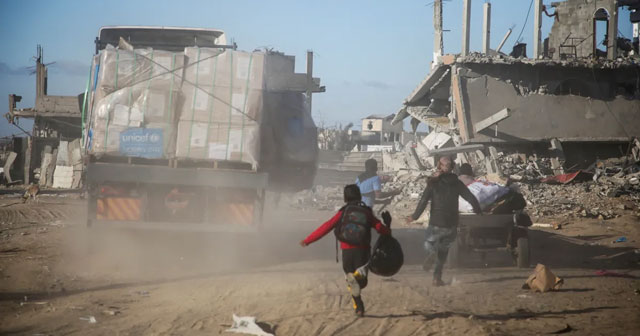
In Gaza, Hamas continues to reject disarmament despite sustained Israeli operations and international mediation. While proposals for a second phase of the ceasefire envision a transition to a new security and governance framework, no regional or international actor has committed to forcibly disarming Hamas. Arab states have made clear they will not assume responsibility for Gaza if it entails direct confrontation with the group, reinforcing Israeli scepticism about interim arrangements that lack enforcement mechanisms.
Analysts argue that US policy must focus not merely on temporary de-escalation but on restoring credible deterrence. This includes reinforcing regional defence postures, safeguarding maritime commerce and ensuring that Iran and its allies face tangible costs for further proxy escalation. At the same time, any stabilisation framework for Gaza or Lebanon, they warn, must include enforceable security arrangements rather than aspirational commitments.
While the region is not yet in open war, the convergence of unresolved conflicts, proxy-based deterrence and firm timelines for disarmament has sharply narrowed the margin for error. Preventing a broader escalation will require addressing not only immediate flashpoints, but also the deterrence structures that have enabled repeated cycles of conflict.