Daijiworld Media Network - New Delhi
New Delhi, Dec 5: The Lok Sabha was informed on Friday that although the Supreme Court has set up an Artificial Intelligence (AI) Committee to study the potential use of AI in the judicial system, India has not yet established any formal policy or guidelines for adopting AI tools in court processes. AI-driven applications in the judiciary currently remain confined to controlled pilot projects.
Minister of State (Independent Charge) for Law and Justice, Arjun Ram Meghwal, stated that AI is being used only in areas specifically approved under the eCourts Phase III project plan. He emphasised that the judiciary is fully aware of the challenges that accompany the integration of AI, including algorithmic bias, gaps in language processing and translation, data privacy vulnerabilities, and the need for human verification of AI-generated results.
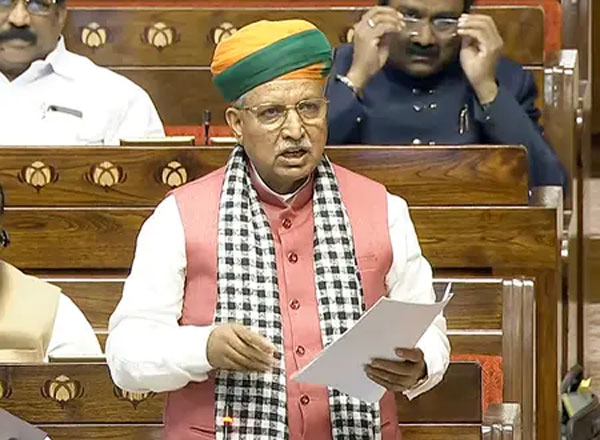
Meghwal noted that the chairperson of the Supreme Court’s e-Committee has constituted a dedicated Sub-Committee comprising six High Court judges and technical experts. Their mandate is to evaluate data protection protocols, recommend secure connectivity and authentication systems, and assess existing digital infrastructure to enhance data security within the eCourts framework.
Providing insight into the limited but evolving use of AI in legal work, he highlighted the development of LegRAA (Legal Research Analysis Assistant) — an AI-supported tool designed to help judges with research and document analysis. In addition, Digital Courts 2.1 has been introduced as a unified interface to streamline case management for judges and judicial officers.
The platform further incorporates ASR-SHRUTI for voice-to-text transcription and PANINI for translation support, enabling smoother dictation of orders and judgments.
According to the minister, the Supreme Court’s e-Committee has so far reported no systemic bias or unintended outputs from these AI tools during the pilot phase.
Addressing concerns over manipulated digital evidence, Meghwal pointed out that courts are seeing a rise in morphed or fabricated electronic content, which has significant potential to distort public perception. He explained that such offences are prosecutable under the Information Technology Act, 2000 — including identity theft (Section 66C), cheating by personation via computer resources (Section 66D), and publication of harmful or obscene digital content (Sections 67, 67A and 67B).
Additionally, he noted that the Bharatiya Nyaya Sanhita, 2023 also covers related crimes such as cheating by personation (Section 319), electronic forgery and falsification of records (Section 336), and forgery of electronic documents (Section 340).