Media Release
Mangaluru, Aug 22: KMC Hospital, Mangaluru through its comprehensive stroke-ready unit consisting of neurologists, neurosurgeons, interventional neuroradiologist, critical care specialist, emergency medicine and rehab experts raised concerns on increasing stroke cases among young adults, few important stroke symptoms which the public failed to identify as well as the need to create awareness among public who would be the first responders when stroke strikes.
As part of KMC Hospital Mangaluru’s 30 golden years of excellence in stroke care, marking three decades of dedicated stroke services. The comprehensive stroke team at the hospital which has treated more than 25,000 stroke cases to date and provides comprehensive stroke care round the clock through Neurology, Neurosurgery, Interventional Radiology,
ICU Care, Emergency Medicine and Neuro Rehabilitation services.
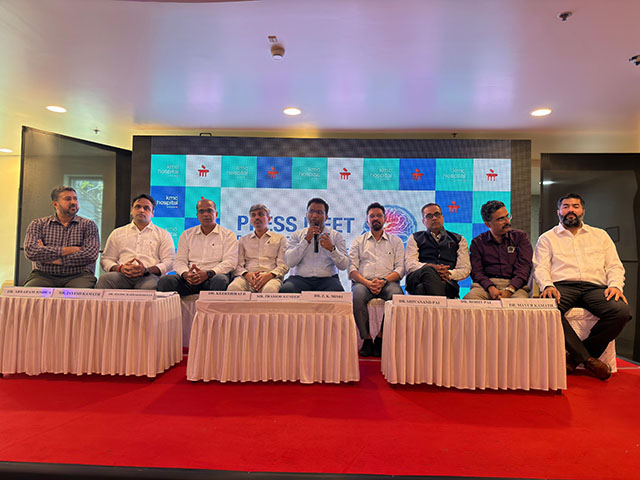
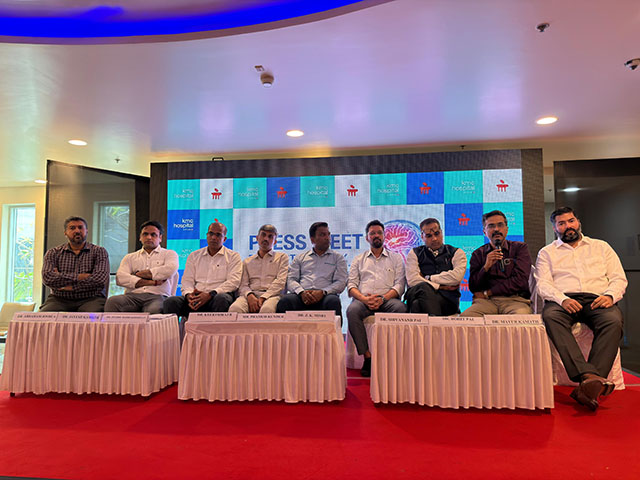
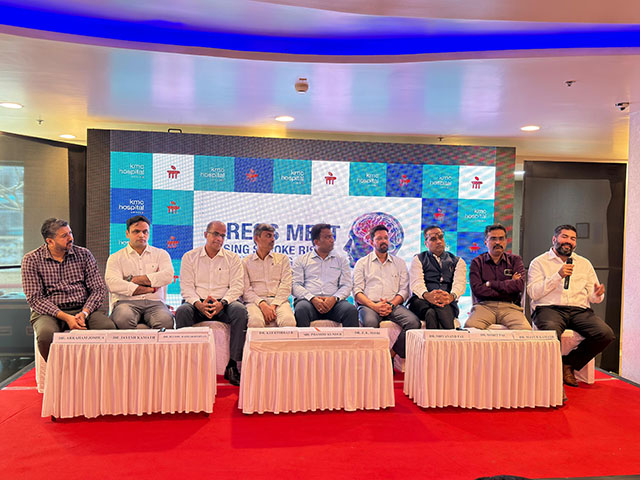
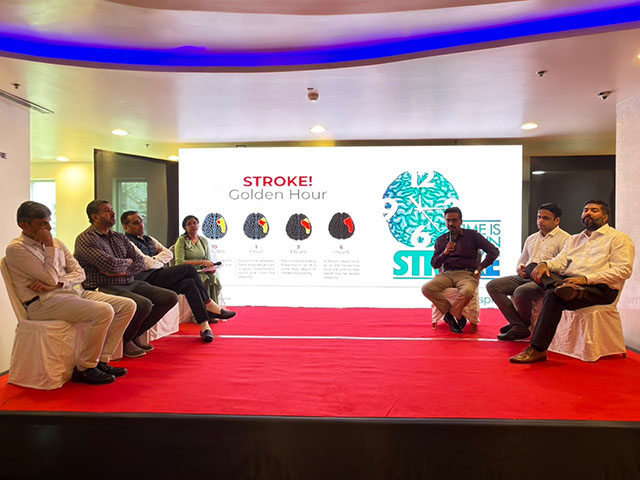
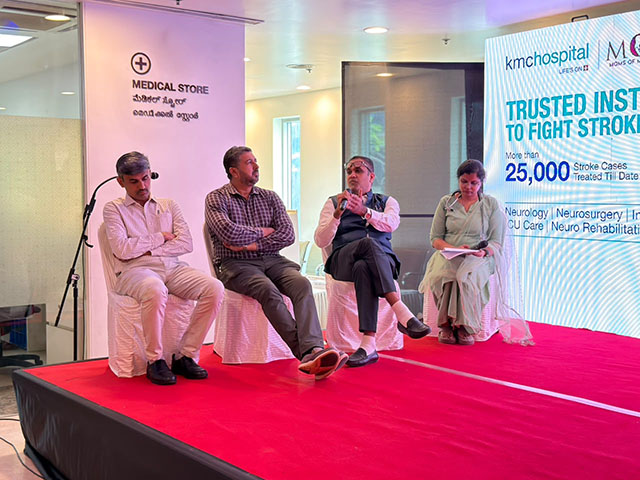
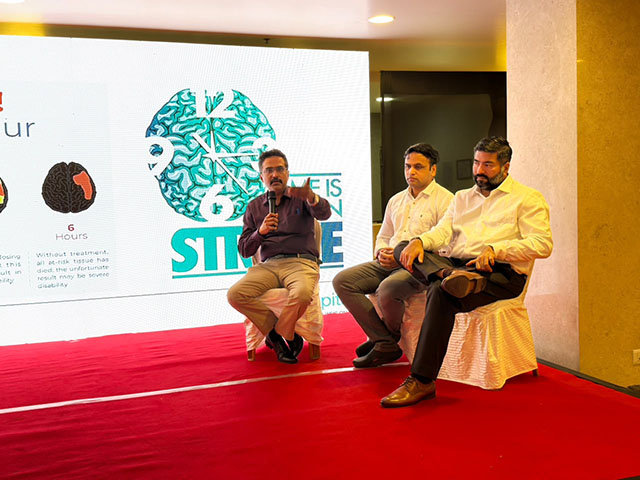
Speaking on the occasion, Pramod Kunder, cluster director, KMC Hospital Mangaluru, said, “Stroke is no longer confined to older age groups; we are witnessing an alarming increase in young adults being affected. The most significant challenge is that people often fail to identify early warning signs or delay seeking care. With stroke, every single minute matters. Through this forum, we want to take that message beyond the hospital and help people understand what they can do when someone develops sudden neurological symptoms. Public awareness and immediate transfer to a designated stroke-ready hospital during the golden hour can entirely alter clinical outcomes and prevent irreversible brain damage.”
Highlighting the shifting clinical trends, Dr Z K Misri, HoD & consultant – Neurology stated that “Having managed more than 25,000 stroke cases, our team is observing a clear upward trend in the 30 to 50 age bracket. Our dedicated stroke unit operates 24x7 with four full-time neurologists, three neurosurgeons, interventional neuroradiologist, critical care specialists, emergency medicine specialists, and a specialised neuro-rehabilitation team, backed by advanced radio- diagnosis centre. Unmanaged stress, sedentary lifestyles, and early hypertension (blood pressure) are increasingly driving vascular incidents in young adults, making rapid triage essential.”
Describing the centre’s clinical capabilities, Dr Shivananda Pai, consultant – Neurology; stated that “It is vital for families and first responders to recognise B.E.F.A.S.T. indicators such as sudden loss of balance, visual changes, facial drooping, arm weakness, and slurred speech. Time is of crucial factor to get the patient treated at stroke-ready hospital within the golden hour of onset of the symptoms. Patients frequently make the mistake of waiting for transient numbness or focal deficits to resolve on their own; any sudden neurological symptom must be treated as an absolute emergency.”
Emphasising acute medical management, Dr Rohit Pai, consultant – Neurology, noted, “In the recent decade the events of stroke among young adults has been alarming. Administering intravenous thrombolysis within the narrow 4.5-hour therapeutic window remains the gold standard for dissolving clots and restoring cerebral perfusion in acute ischemic strokes. Beyond immediate stabilisation, comprehensive secondary stroke prevention—addressing lifestyle factors, blood pressure, diabetes, cholesterol, and hidden cardiac conditions—is crucial to avoid recurrence.”
Discussing endovascular stroke therapy, Dr. Keerthiraj B, consultant – Interventional Neuroradiology, said, “Through minimally invasive mechanical thrombectomy, large-vessel occlusive clots can be mechanically extracted swiftly, restoring blood flow to the brain without losing critical time. This advanced interventional radiology capability extends the treatment window up to 24 hours in selected candidates, offering life-changing outcomes that standard intravenous therapy alone may not achieve.”
Addressing surgical interventions, Dr Mayur Kamath, consultant – Neurosurgery, remarked, “Surgical decompression and vascular intervention are lifesaving when severe ischemic strokes produce dangerous brain swelling or when acute haemorrhagic strokes demand rapid clot evacuation. Timely surgical involvement relieves elevated intracranial pressure, protects salvageable brain tissue, and significantly minimizes long-term mortality in critical presentations.”
Outlining the emergency response network, Dr Jeedhu Radhakrishnan, cluster head – Emergency Medicine, explained, “Our peripheral network of five emergency centres across Kundapura, Surathkal, Puttur, Kakkinje, and Cheruvathur acts as the first line of defence in stabilising all types of emergencies including stroke. With a dedicated fleet of six Advanced
Life Support ambulances staffed by trained trauma technicians and continuously monitored by our specialist doctors during transit, we effectively extend the golden hour right from the patient’s location to the stroke-ready hospital.”
Elaborating on transit stabilisation, Dr Jayesh Kamath, consultant – Critical Care, said, “Dedicated neuro-intensive care monitoring is paramount to control secondary cerebral edema, prevent reperfusion injury, and stabilise systemic organ function post-intervention. Maintaining strict hemodynamic and metabolic control in the acute post-stroke phase is directly tied to superior functional recovery.”
Focusing on post-stroke functional recovery, Dr Abraham Joshua, professor, Department of Physiotherapy, noted, “Multidisciplinary neuro-rehabilitation must commence at the bedside within 24 to 48 hours of clinical stabilisation. Early, tailored physical, occupational, and speech therapies harness neuroplasticity, helping stroke survivors regain motor strength, functional independence, and overall quality of life.”
The expert panel comprised Dr Z K Misri, HoD & consultant – Neurology; Dr Shivanand Pai, consultant – Neurology; Dr Rohit Pai, consultant – Neurology; Dr Arpita Shrivastava, consultant neurology; Dr Mayur Kamath, consultant – Neurosurgery; Dr Keerthiraj B, consultant – Interventional Neuroradiology; Dr Jeedhu Radhakrishnan, cluster head – Emergency Medicine; Dr Jayesh Kamath, consultant – ICU & critical care; and Dr Abraham Joshua, professor, Department of Physiotherapy.
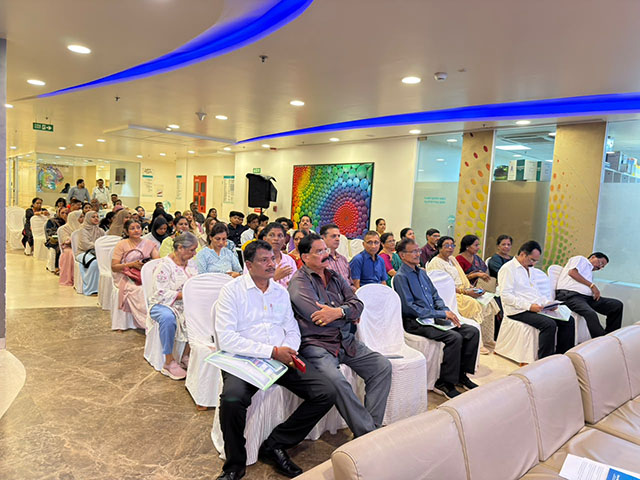
This was followed by first responder awareness programme for volunteers aimed at identifying the symptoms of stroke, addressing myths & facts on stroke and immediate actionable steps to be taken when they identify stroke victims in their surroundings. For emergencies, call: 0824 222 2227
About Manipal Hospitals
Manipal Hospitals is one of India’s leading integrated healthcare providers serving ~ 8 million patients annually, focussed on providing accessible, high-quality healthcare services.
Manipal’s integrated network today has a pan-India footprint of 50 hospitals with over 13,400 licensed beds across 14 States & union territories. The network is India’s largest multispecialty hospital network by bed capacity, supported by a talented pool of 11,000+ doctors and an employee strength of over 25,000.
With a commitment to provide patient-centric care, Manipal Hospitals combines clinical expertise with advanced technology, research and innovation to serve a multitude of patients across the globe. Its continued focus on clinical quality and operational excellence is reflected in its NABH accreditation, with several of its hospitals also accredited by NABL and recognised for its excellence in nursing and emergency care.