Daijiworld Media Network - Aden
Aden, Apr 19: Measures introduced by Yemen’s internationally recognised government to stabilise the national currency have helped arrest the sharp fall of the Yemeni riyal, but have triggered a severe liquidity crisis, leaving citizens and businesses grappling with an acute shortage of cash.
The Central Bank, based in Aden, had moved to shut down unauthorised exchange firms, centralise remittance systems, and regulate imports by providing traders with foreign currency. These steps contributed to strengthening the riyal from nearly 2,900 to around 1,500 against the US dollar in recent months.
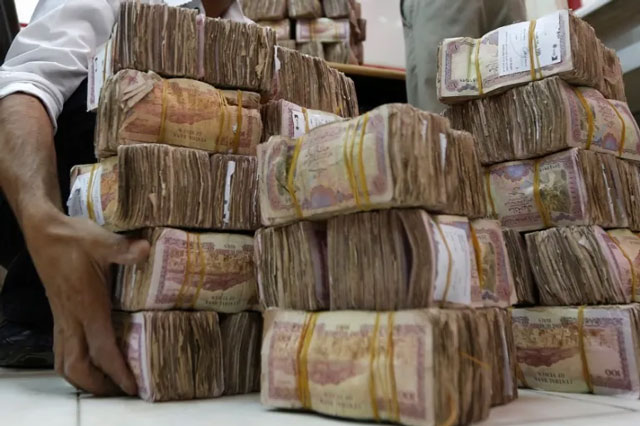
However, the gains have come at a cost. Residents across government-controlled cities such as Aden, Taiz, and Mukalla report an unprecedented shortage of local currency, with banks and exchange outlets either refusing to convert foreign currencies or imposing strict daily limits.
The shortage has disrupted daily life and business operations, forcing many to turn to informal markets where foreign currencies are exchanged at unfavourable rates. Small traders say the situation has significantly impacted their livelihoods, with some forced to shut shops due to lack of usable cash.
Government employees have also raised concerns, alleging that salaries are being disbursed in low-denomination notes, making transactions cumbersome and often unacceptable to merchants.
The crisis has been particularly difficult for those dependent on remittances or payments in Saudi riyals and US dollars, including expatriate families and soldiers. In several cases, patients have reportedly faced difficulties accessing medical services due to the inability to convert foreign currency into local cash.
Authorities have acknowledged the liquidity problem and indicated that both short- and long-term measures are being considered to address the issue while maintaining currency stability.
Yemen’s fragile economy, already strained by years of conflict and financial instability, now faces the challenge of balancing currency control with ensuring sufficient cash flow, as public frustration continues to mount.