Daijiworld Media Network - Gandhinagar
Gandhinagar, Feb 22: In a significant public health initiative, the Gujarat government is set to introduce anti-venom developed exclusively from the venom of snake species native to the state. The move is aimed at enhancing treatment effectiveness and reducing fatalities caused by snakebites.
The project is spearheaded by the Snake Research Institute (SRI), established by the state government in Dharmapur, Valsad district. The institute currently houses around 460 venomous snakes collected from different parts of Gujarat.
Scientific Venom Extraction and Production
Venom extraction at the institute is carried out in accordance with World Health Organisation (WHO) protocols. Using modern processing techniques, the venom is lyophilised (freeze-dried) into powder form. This processed venom is then auctioned to licensed anti-venom manufacturers.
The state government will procure the anti-venom produced from this locally sourced venom and distribute it to hospitals across Gujarat to ensure timely and more effective snakebite treatment.
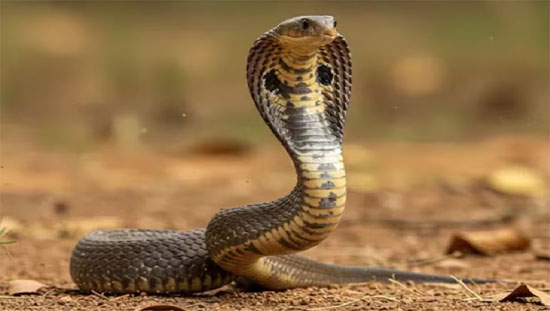
During a recent e-auction, the high quality of venom extracted at the institute attracted prices well above the base rates. For instance, venom of the Indian Cobra fetched Rs 44,000 per gram against a base price of Rs 40,000, while the Saw-Scaled Viper venom secured Rs 56,500 per gram compared to the base rate of Rs 50,000. Venom from other major species also witnessed strong demand.
The auction included lyophilised venom from four medically significant snakes found in Gujarat — Indian Cobra, Common Krait, Russell's Viper, and Saw-Scaled Viper.
Why Regional Anti-Venom Matters
According to D.C. Patel, Vice-Chairman of the Snake Research Centre and a general surgeon based in Dharmapur, venom composition varies geographically. Anti-venom manufactured using venom sourced from distant regions may not always be optimally effective for local snakebite victims.
By focusing on species found within Gujarat, the SRI aims to develop anti-venom that is better suited to the state’s specific snake population. Patel, who has treated snakebite cases for over 35 years with a success rate exceeding 98 per cent, has documented every case during his career.
He emphasised that adherence to WHO guidelines ensures high-quality venom extraction, which is expected to translate into improved patient outcomes and a reduction in mortality rates.
Institutional Support and Expansion Plans
The SRI operates under the Gujarat Forestry Research Foundation (GFRF), an autonomous body functioning under the state’s Forest and Environment Department.
Plans are in motion to transform the institute into a world-class research and training centre. The Valsad district administration has allocated 2.25 hectares of land for a permanent campus, and a proposal worth Rs 11.68 crore has been submitted to the state government for infrastructure development.
Currently, venom extraction for anti-venom production in India is primarily undertaken by the Irula Snake Catchers Industrial Cooperative Society Limited in Tamil Nadu. With its operations in Dharmapur, the Snake Research Centre has become only the second institution in the country engaged in this specialised work.
Part of a National Mission
India recently became the first country to roll out a comprehensive national action plan to tackle snakebite envenoming. Under the leadership of Prime Minister Narendra Modi, the Centre launched the ‘National Action Plan for Prevention and Control of Snakebite Envenoming (NAP-SE)’ in March 2024. The plan aims to cut snakebite-related deaths and disabilities by 50 per cent by 2030.
Gujarat’s Snake Research Institute plays a crucial role in supporting this national mission.
Beyond research, the institute has trained more than 300 local snake rescuers and over 1,495 doctors and medical officers across 23 districts in effective snakebite management. It also conducts awareness programmes in collaboration with teachers and local panchayats to promote safe practices and counter superstitions.
Additionally, the institute has published a photographic field guide titled Snakes of Valsad and produced a documentary film to further spread awareness.
With state-specific anti-venom soon to be available, Gujarat is positioning itself at the forefront of scientific and regionally tailored snakebite management in India.