Daijiworld Media Network - Kolkata
Kolkata, May 6: In his first address to voters in Nandigram after securing a third consecutive term, BJP leader Suvendu Adhikari called on party workers to avoid retaliatory violence and maintain calm in the post-election period.
Speaking to supporters in the East Midnapore district of West Bengal, Adhikari stressed that political rivalry should not translate into aggression. He urged BJP cadres not to imitate what he described as a “culture of post-poll violence” associated with the opposition All India Trinamool Congress.
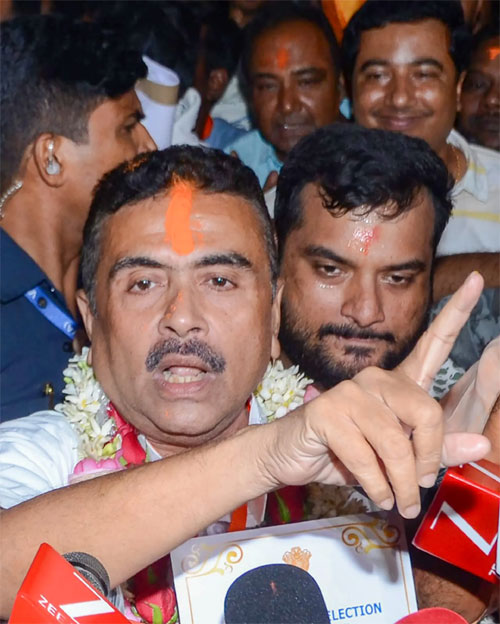
“The elections are over. Do not take the law into your own hands. Do not replicate their culture. Peace must be your priority,” he said, emphasizing the need for restraint despite years of political hostility in the region.
Adhikari also advised party leaders to postpone victory celebrations until after the formation of the new cabinet, expected around May 9, and to ensure that any processions are conducted peacefully and with official permission.
The BJP registered a clean sweep in East Midnapore, winning all 16 Assembly seats in the district—once considered a stronghold of the Trinamool Congress. Adhikari himself won from both Nandigram and Bhabanipur, defeating Chief Minister Mamata Banerjee in the latter by a margin of over 15,000 votes.
Reflecting on the results, he attributed the party’s success to “patience” and “tolerance,” and said that any alleged wrongdoing against BJP workers in the past would be pursued through legal channels once the new government takes charge.
He added that cases related to past violence would be reopened and investigated, but reiterated that supporters must not resort to vigilante action.
Alongside political remarks, Adhikari announced development promises for Nandigram, including the establishment of an English-medium school and an Industrial Training Institute (ITI), stating that the mandate came with a responsibility to deliver governance and services.
“We believe in being re-elected through work, not force,” he said, framing the party’s approach as one focused on governance rather than confrontation.