Daijiworld Media Network - Mumbai
Mumbai, Apr 21: Maharashtra chief minister Devendra Fadnavis on Tuesday sharply criticised the Indian National Congress and other opposition parties, accusing them of misleading the public and failing to support women’s political representation.
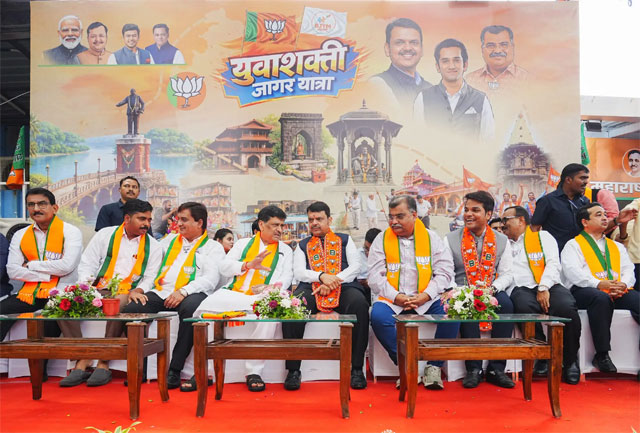
Speaking at the launch of the Yuva Shakti Jagar Yatra, organised under the leadership of Krishnaraj Mahadik of the Bharatiya Janata Yuva Morcha, Fadnavis alleged that the opposition had effectively blocked progress on the Women’s Reservation Bill. He claimed that while the bill had earlier received backing when the Bharatiya Janata Party held stronger numbers in Parliament, the current political situation had exposed what he described as the opposition’s reluctance.
He further accused rival parties of undermining “Nari Shakti” and weakening democratic values. Referring to parliamentary proceedings, Fadnavis said Amit Shah had shown openness to incorporating suggested amendments, but alleged that the opposition did not engage constructively.
The chief minister also dismissed concerns raised around delimitation and the census, arguing that such issues were being used to avoid meaningful debate on women’s representation. He reiterated his party’s commitment to ensuring 33 percent reservation for women in legislative bodies.
Addressing party workers, Fadnavis placed strong emphasis on youth mobilisation, describing it as central to shaping the state’s future. He framed the initiative as part of a broader ideological contest, urging young people to challenge what he termed misinformation and divisive narratives.
He also raised concerns about the influence of radical ideologies among students, warning of attempts to sway young minds in educational institutions. According to him, the Yatra aims to counter such trends by promoting constitutional values and a sense of national responsibility.
Highlighting that a significant share of Maharashtra’s population is under 35, Fadnavis said channeling youth energy in a focused direction could drive meaningful social and economic change. He expressed confidence that the outreach campaign would engage diverse sections of society and encourage constructive participation in the state’s development.