Daijiworld Media Network - New Delhi
New Delhi, Apr 14: Prime Minister Narendra Modi and US President Donald Trump held a nearly 40-minute telephone conversation on Tuesday, April 14, reviewing bilateral ties and discussing escalating tensions in West Asia following the collapse of US-Iran peace talks.
Sharing details of the interaction, Modi said in a post on X, “Received a call from my friend President Donald Trump. We reviewed the substantial progress achieved in our bilateral cooperation in various sectors. We are committed to further strengthening our Comprehensive Global Strategic Partnership in all areas. We also discussed the situation in West Asia and stressed the importance of keeping the Strait of Hormuz open and secure.”
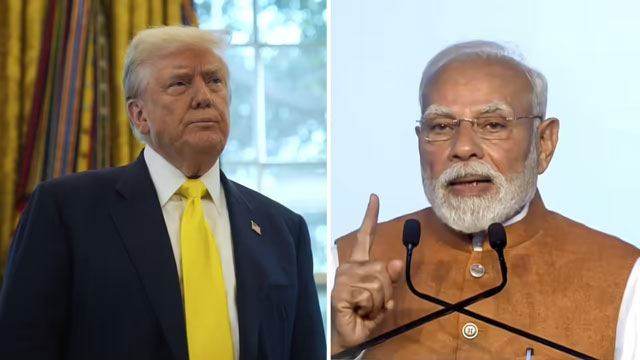
During the conversation, both leaders underscored the strategic importance of keeping the Strait of Hormuz open and secure, particularly in light of recent developments in the region.
The discussion came after the United States ordered a blockade of ships entering or leaving Iranian ports and coastal areas in the Gulf following the failure of peace talks over the weekend. President Trump also warned that any Iranian vessels attempting to challenge the blockade would be destroyed.
According to US ambassador to India Sergio Gor, the call concluded on a personal note, with Trump telling Modi, “I just want you to know we all love you.”
This marked the third conversation between the two leaders this year. They had earlier spoken on February 2 regarding progress on a bilateral trade agreement and again on March 24 to review the evolving situation in West Asia. It also comes amid heightened tensions following US and Israeli strikes on Iran on February 28.
The latest engagement follows nearly 21 hours of direct negotiations between the United States and Iran in Islamabad, which ended without any breakthrough, casting fresh uncertainty over a fragile two-week ceasefire. Both sides blamed each other for the deadlock.
US officials maintained that the talks collapsed after Iran refused to commit to abandoning its nuclear programme. “We need to see an affirmative commitment that they will not seek a nuclear weapon, and they will not seek the tools that would enable them to quickly achieve a nuclear weapon,” US vice president J D Vance said after the talks.
On the Iranian side, parliamentary speaker Mohammad Bagher Qalibaf, who led the delegation, said the responsibility now lies with Washington. “It is time for the United States to decide whether it can gain our trust,” he said.
The developments underline the continuing volatility in West Asia, with global attention focused on diplomatic efforts and the security of key maritime routes.