Daijiworld Media Network - Washington
Washington, Mar 20: US authorities have charged three individuals, including a cofounder of Super Micro Computer, for allegedly smuggling at least $2.5 billion worth of American artificial intelligence technology to China in violation of export laws.
According to the United States Department of Justice, the accused—Yih-Shyan Liaw, Ruei-Tsang Chang, and Ting-Wei Sun—were part of a complex scheme to illegally route US-made servers to China through intermediary countries.
While prosecutors did not explicitly name Super Micro in the indictment, referring only to a “US manufacturer,” the San Jose-based company confirmed it had been informed of the charges and clarified that it is not a defendant in the case. The company added that it has cooperated with investigators.
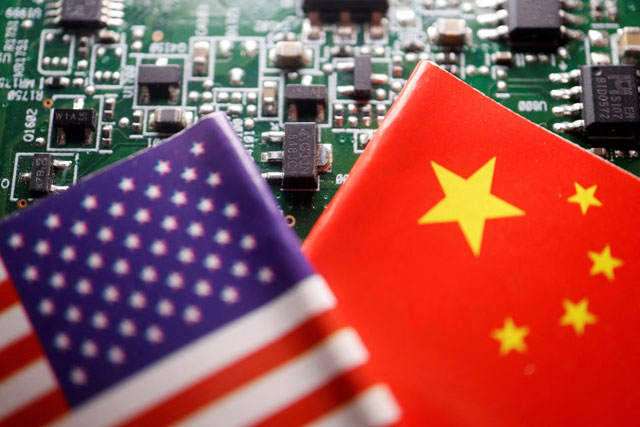
The indictment, unsealed in a Manhattan federal court, alleges that the accused shipped servers via Taiwan to Southeast Asian nations, where they were repackaged into unmarked boxes before being forwarded to China, bypassing US export restrictions imposed on advanced AI technologies since 2022.
Officials said the defendants used fabricated documents, staged fake equipment for audits, and operated through intermediary firms to conceal the true end users. Investigators also alleged that labels and serial numbers were removed using tools such as hair dryers and transferred onto dummy machines left behind.
Liaw, 71, a US citizen and cofounder of Super Micro, was arrested in California along with Sun, a contractor. Chang, a sales manager at the company’s Taiwan office, remains at large.
US Attorney Jay Clayton said such schemes pose a serious threat to national security, while FBI official James Barnacle highlighted the elaborate methods used to evade detection.
Following the developments, Super Micro said it has placed Liaw and Chang on leave and severed ties with Sun. The company’s shares dropped around 8 percent in after-hours trading.
Chipmaker Nvidia, a key supplier in the AI hardware space, said it maintains strict compliance with export regulations and does not support unauthorised diversion of its products.
The case underscores growing US concerns over the transfer of advanced technology to China and the enforcement of export controls in the AI sector.