Daijiworld Media Network - New Delhi
New Delhi, Mar 20: A new study has shed light on the biological basis of persistent taste dysfunction in patients suffering from long-term effects of COVID-19, suggesting that subtle molecular changes—rather than structural damage—may be responsible for lingering symptoms.
Loss or alteration of taste is a common symptom during the acute phase of COVID-19, usually resolving within weeks. However, in some individuals, these disturbances persist for months or even years as part of post-acute COVID-19 syndrome.
To investigate this, researchers examined 28 non-hospitalised individuals who continued to experience taste dysfunction more than a year after SARS-CoV-2 infection. Objective testing using the Waterless Empirical Taste Test showed that while most participants had overall taste scores within normal limits, specific dysfunctions were still evident.
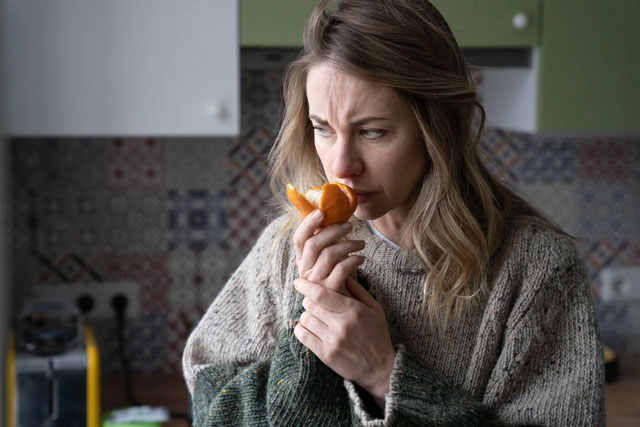
Only three participants scored below the 10th percentile for overall taste ability, but 11 individuals reported complete loss of at least one type of taste.
The study found that sweet, bitter, and umami tastes were most commonly affected, while salty and sour sensations remained largely intact. Researchers noted that these affected tastes rely on a shared signalling pathway involving the protein PLCβ2, pointing to a targeted disruption.
Further analysis through biopsies of taste papillae revealed that the structure and nerve supply of taste buds were mostly preserved, with only minor abnormalities. No viral RNA was detected in tissue samples, ruling out ongoing infection as the cause of symptoms.
Instead, molecular findings showed reduced expression of key genes such as PLCβ2 and TAS1R3, which play a crucial role in transmitting taste signals in specific receptor cells. This reduced activity may impair the brain’s ability to interpret taste, even when the taste buds themselves remain structurally intact.
Researchers concluded that long-term taste dysfunction in COVID-19 patients is relatively uncommon but measurable, and is likely driven by persistent molecular alterations rather than irreversible damage.
While the study was limited by a small sample size and lack of pre-infection data, it provides early evidence linking subjective taste loss to measurable biological changes. The authors called for further research to explore whether these changes can be reversed and to identify possible treatments.
The findings offer deeper insight into long COVID and highlight the complex and lasting impact of the virus on sensory functions.