Daijiworld Media Network - Kathmandu
Kathmandu, Mar 8: The outcome of Nepal’s recent elections could create an opportunity to revive ties between India and Nepal, relations that have experienced strains in recent years. With the possibility of a strong government emerging in the Himalayan nation, analysts believe there could be renewed momentum to improve bilateral cooperation.
The foundation of the two countries’ relationship rests on the India–Nepal Treaty of Peace and Friendship, which established open borders and highlighted the deep cultural and social connections between the neighbours. Over the decades, India has remained a major development partner for Nepal, supporting trade, infrastructure, and investment initiatives. The bond between the countries is also reinforced by extensive people-to-people ties.
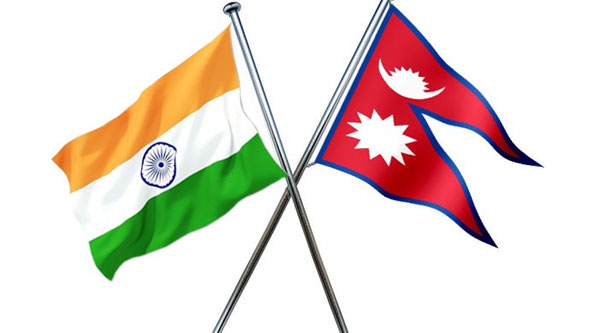
However, the relationship has periodically faced challenges, often influenced by political changes within Nepal. Long-standing issues such as border disputes, security concerns, a widening trust deficit, and allegations of political interference have complicated diplomatic engagement between the two sides.
Welcoming the successful conduct of the March 5 elections, India’s External Affairs Ministry reiterated its support for Nepal’s democratic process. In a statement, the ministry said that India had provided logistical assistance at the request of the Nepali government to facilitate the polls.
“We look forward to working with the new Government of Nepal to further strengthen the robust and multifaceted ties between our two countries and peoples for mutual benefit,” the statement said, while congratulating the government and citizens of Nepal for the successful election process.
Former Indian Ambassador to Nepal Jayant Prasad expressed hope that the election would produce a stable administration capable of ensuring effective governance. He noted that a clear mandate could help the country move forward politically and economically.
In recent years, Nepal has also witnessed growing engagement with China, a development that has drawn attention in New Delhi. Even though the Rastriya Swatantra Party (RSP) appears poised to lead the next government, observers caution that major changes in foreign policy are unlikely to occur immediately.
The party’s election manifesto notably avoided emphasising the Damak Industrial Park project in Jhapa district, located near the strategically important Siliguri Corridor in India, often referred to as the “Chicken’s Neck.” The project had previously been associated with China’s Belt and Road Initiative, which India has viewed with caution because of its strategic implications.
At the same time, the RSP has proposed reviewing Nepal’s long-standing currency exchange arrangement with India. Since 1993, the rate has remained fixed, with 100 Indian rupees equal to 160 Nepali rupees. The party has pledged to examine this system with the help of international experts to determine whether adjustments are necessary.
While earlier Nepali governments were often perceived as leaning either toward India or China, RSP’s projected prime ministerial candidate Balen Shah is widely regarded as a strong nationalist. His approach, according to observers, emphasises maintaining balanced relations with both neighbouring powers rather than aligning closely with either side.
Shah has promoted a “Nepal First” message during the election campaign, appealing to voters who favour prioritising national interests in foreign policy decisions. In the past, he has drawn attention for his outspoken views on social media and symbolic gestures such as displaying a “Greater Nepal” map in his mayoral office that included certain territories currently within India.
He had also called for a ban on Indian films after a controversy involving a movie that referred to Goddess Sita as “India’s daughter.” Shah argued that traditional beliefs place Sita’s birthplace within Nepal or near its border with the Indian state of Bihar.
If Shah assumes office, he would lead a single-party government — something Nepal has not experienced since adopting its constitution in 2015.
Economic growth and employment are expected to remain key priorities for the new administration. According to World Bank data, India continues to be Nepal’s largest trading partner, accounting for about $8.6 billion, or roughly 63 percent of Nepal’s imports, while China follows with around $1.8 billion, representing about 13 percent.