Daijiworld Media Network – New Delhi
New Delhi, Feb 27: The Delhi High Court has held that the right to possess a passport and travel abroad is an essential facet of the right to personal liberty guaranteed under Article 21 of the Constitution, and any state action curtailing this right must strictly adhere to principles of natural justice.
A bench of Justice Purushaindra Kumar Kaurav, in its February 20 order, observed, “The right to hold a passport and to travel abroad is an integral facet of the right to personal liberty guaranteed under Article 21 of the Constitution of India. It follows that any State action impinging upon the right to hold a passport must satisfy the test of reasonableness and must be in conformity with the principles of natural justice.”
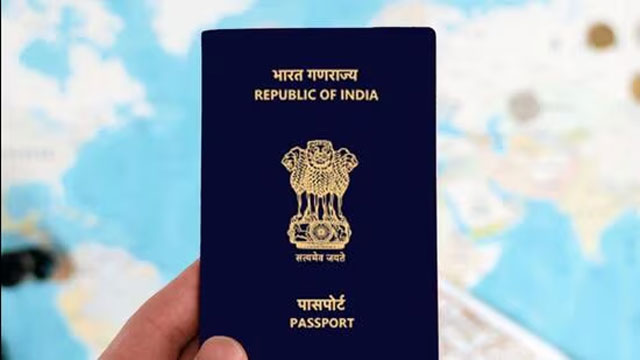
The ruling came while setting aside the Centre’s decision to impound the passport of Yogesh Raheja, former director of Raheja Developers.
On January 17, 2025, the Centre had impounded Raheja’s passport on the ground that he failed to disclose the pendency of an FIR registered against him in 2018 while applying for renewal. His subsequent appeal was rejected on March 25, 2025.
Challenging both orders, Raheja approached the High Court. In his petition, argued by Sandeep Kapur, Senior Partner at Karanjawala & Co., it was contended that mere registration or pendency of an FIR does not amount to “pendency of criminal proceedings” within the meaning of Sections 6 and 10 of the Passports Act, 1967.
Section 6 empowers passport authorities to refuse issuance or renewal in specified cases, including when criminal proceedings are pending before a court, while Section 10 grants powers to vary, impound or revoke a passport on certain grounds, including pending proceedings before a criminal court.
Considering the submissions, the High Court held that the Centre’s decision was legally unsustainable since the trial court had not taken cognisance of the FIR at the time of impounding the passport.
The court also relied on the Supreme Court’s ruling in Mahesh Kumar Agarwal v. Union of India (2025), which clarified that the objective of Sections 6 and 10 of the Passports Act is to ensure that a person facing criminal proceedings remains within the jurisdiction of criminal courts. The apex court had further observed that an indefinite refusal to renew a passport would amount to a disproportionate and unreasonable restriction on personal liberty.
“The case of Mahesh Kumar Agarwal involved a scenario where cognisance had been taken and criminal proceedings were actively pending. The Supreme Court held that even in that more advanced factual situation, Section 6(2)(f) of the Act is not an absolute bar. In the case at hand, cognisance had not been taken at the time of impounding. In view of the aforesaid, it is evident that the decision passed by the respondents cannot be sustained. Accordingly, orders dated 17.01.2025 and 25.3.2025 stand set aside,” the High Court said in its order.