Daijiworld Media Network - Jerusalem
Jerusalem, Feb 25: Prime Minister Narendra Modi arrived in Israel on a two-day visit, his first since the outbreak of the Gaza war, amid heightened regional tensions and growing global scrutiny of the conflict.
Modi was received by Israeli Prime Minister Benjamin Netanyahu at Ben-Gurion Airport. The two leaders are scheduled to hold talks before heading to Jerusalem, where the Prime Minister will address the Knesset and meet President Isaac Herzog. No meeting with Palestinian leaders is on his schedule.
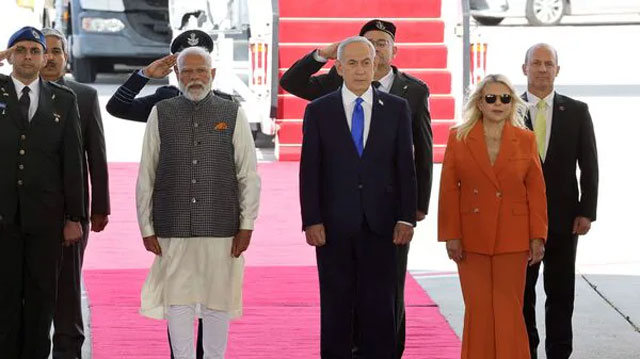
The visit comes as India and Israel seek to deepen cooperation in defence, technology and trade — a partnership that has expanded significantly over the past decade. India remains among the largest buyers of Israeli defence equipment, and the two countries work closely on counter-terrorism and strategic security.
Calling the trip “historic”, Netanyahu said the bond between the two nations represents a powerful alliance based on innovation, security and shared strategic vision. Modi, in response, said India deeply values its enduring friendship with Israel, built on trust, innovation and a shared commitment to peace and progress.
The Knesset building was illuminated in the colours of the Indian flag ahead of Modi’s arrival, underscoring the symbolic importance attached to the visit.
India has condemned the October 7 Hamas-led attacks on Israel and expressed solidarity with the country, while also voicing concern over civilian casualties in Gaza and reiterating support for a two-state solution.
However, the visit unfolds against the backdrop of regional uncertainty, including tensions involving Iran and the United States. Analysts say discussions on sensitive regional issues are likely to remain behind closed doors, with the primary focus on strengthening bilateral engagement.
Foreign policy experts note that India is attempting to balance its growing partnership with Israel while maintaining strong ties with other West Asian countries, including Iran and Gulf nations.
In Israel, Modi’s proposed address to the Knesset has triggered political controversy, with opposition leaders threatening a boycott over internal judicial reform disputes.
In India, opposition figures, including Congress leader Jairam Ramesh, have criticised the visit, accusing the government of sidelining the Palestinian cause.
Despite the criticism, analysts say the visit reflects India’s long-term strategic interests, particularly in defence technology and security cooperation, while remaining mindful of regional stability and energy security concerns.