Daijiworld Media Network - New Delhi
New Delhi, Feb 15: India has asserted that its energy purchases will be guided by “costs, risks and availability” and not by political pressure, amid fresh US sanctions on Russian oil and claims by Washington that New Delhi has agreed to halt additional imports of Russian crude.
Speaking at the Munich Security Conference on Saturday, External Affairs Minister S Jaishankar firmly reiterated India’s commitment to strategic autonomy.
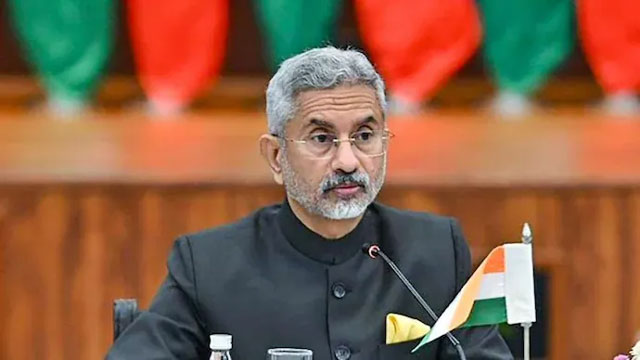
His remarks came after US President Donald Trump and Secretary of State Marco Rubio claimed that India had agreed to stop buying additional Russian oil following new US sanctions on Moscow’s energy sector.
Rubio was quoted as saying that the US had secured India’s commitment to refrain from purchasing additional Russian oil. Earlier, Trump had also declared that India had agreed to stop buying Russian oil and increase purchases from the US as part of a trade breakthrough after months of tariff tensions.
However, Jaishankar made it clear that India’s foreign policy stance remains unchanged.
“We are very much wedded to strategic autonomy because it is very much a part of our history and our evolution. And it is something which is very deep, it is something which cuts across the political spectrum as well,” he said during a panel discussion alongside German Foreign Minister Johann Wadephul.
Describing the global oil market as “complex”, Jaishankar said energy decisions are taken by companies based on practical considerations. “The oil companies in India, as in Europe and probably in other parts of the world, look at availability, look at costs, look at risks and take decisions that they feel are in their best interest,” he said.
When asked whether India would stop buying Russian oil under the trade deal, he responded, “If the bottom line of your question is — would I remain independent-minded and make my decisions and would I make choices which may not agree with your thinking — yes, it can happen.”
India has neither officially confirmed nor denied Washington’s assertion regarding additional Russian oil purchases.
The energy debate has unfolded alongside a recalibration in trade ties. Following a recent phone conversation between Prime Minister Narendra Modi and Trump, both countries announced a reduction in US tariffs on Indian goods to 18 per cent from 50 per cent. The rollback included removal of a 25 per cent tariff imposed in August last year over India’s continued imports of Russian oil.
During the period of strained trade relations, Trump had repeatedly pressed India to scale back its Russian oil purchases amid the Ukraine conflict. India, however, justified its procurement of discounted Russian crude on grounds of energy security and economic stability.
Amid the contrasting narratives, Russian Foreign Minister Sergey Lavrov dismissed reports of any assurance from India, stating that the Indian government had made no such public commitment.
Since the outbreak of the Ukraine conflict, India has significantly increased imports of discounted Russian crude, which now account for nearly 35 per cent of its total oil requirements. At the same time, New Delhi has diversified its energy basket, with US crude making up nearly 10 per cent of total imports. Indian public sector refiners have also signed a one-year deal for American liquefied petroleum gas.
In a related development, Parliament recently passed the Sustainable Harnessing and Advancement of Nuclear Energy for Transforming India (SHANTI) Bill, 2025, opening the tightly regulated nuclear power sector to private participation.
At Munich, Jaishankar also called for reforms in the United Nations, arguing that recent global crises — from the Covid-19 pandemic to the Ukraine war and tensions in the Middle East — have exposed limitations in the current international architecture.
The broader message from New Delhi was clear: while partnerships may evolve and trade tensions may ease, India will retain the final say on its strategic and energy decisions.