Daijiworld Media Network - New Delhi
New Delhi, Jan 22: A team of bioengineers at the Indian Institute of Technology (IIT) Bombay has developed two advanced digital platforms — BrainProt and DrugProtAI — designed to bring together fragmented data on brain disorders and significantly speed up research into disease markers, treatment pathways, and drug targets.
The upgraded BrainProt v3.0 serves as a comprehensive database that integrates diverse biological information, ranging from genes to proteins, into a single, user-friendly platform. The system enables researchers to gain systematic insights into how the human brain functions in both healthy and diseased states.
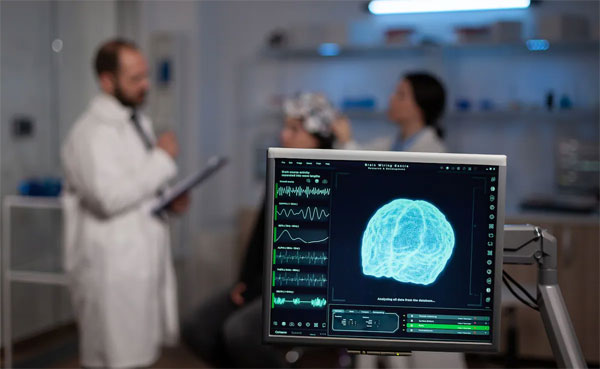
Notably, BrainProt is the first platform to consolidate multi-disease and multi-omics data — including genomics, transcriptomics, proteomics, and biomarker research — along with information drawn from multiple scientific databases, all within one portal.
“BrainProt also offers a unique resource to study protein expression differences between the left and right hemispheres of the human brain across 20 neuroanatomical regions. This is the first database of its kind,” said Prof. Sanjeeva Srivastava from IIT Bombay’s Department of Biosciences and Bioengineering.
The platform currently hosts data on 56 human brain diseases and 52 multi-omics datasets generated from over 1,800 patient samples. These include transcriptomic datasets covering 11 diseases and proteomic datasets for six neurological conditions. For each disease, researchers can identify frequently linked genes and proteins, evaluate the strength of existing scientific evidence supporting them, and analyse how their activity levels differ in patient samples.
Complementing BrainProt is DrugProtAI, an artificial intelligence–driven tool developed to predict whether a protein is “druggable” — meaning it possesses the necessary biological and physical traits to serve as an effective drug target — before researchers commit to expensive and time-consuming laboratory experiments.
This capability is especially important given that only around 10 per cent of human proteins currently have FDA-approved drugs, with an additional 3–4 per cent under clinical investigation.
“Rather than focusing only on a protein’s sequence, DrugProtAI evaluates factors such as cellular location, structural features, and other distinctive characteristics to predict druggability,” explained Dr. Ankit Halder, co-author of the study.
The tool generates a druggability index, a probability score indicating how likely a protein is to be successfully targeted by a drug. Higher scores suggest similarities with proteins that already have approved therapies, while lower scores indicate greater challenges in drug development.
By integrating DrugProtAI directly into BrainProt, the researchers have created an end-to-end pipeline that allows scientists to move seamlessly from identifying a disease marker to analysing its expression and assessing its drug potential — all in a matter of hours.
“This integration enables researchers to explore potential drug targets, existing compounds, and even ongoing clinical trials within a single workflow,” Halder said, describing it as a major step toward faster and more efficient brain disease research.