Daijiworld Media Network – Bengaluru
Bengaluru, Jan 23: Widely recognised on the global stage for its IT sector and other achievements, Bengaluru has now drawn worldwide attention for a less favourable reason — traffic congestion. According to the TomTom Traffic Index report, Bengaluru has secured the second position among the most traffic-congested cities in the world, with Mexico city ranking first.
Bengaluru recorded an average congestion level of 74.4 per cent. Compared to 2024, congestion increased by 1.7 per cent in 2025. Drivers in the city were able to cover only an average distance of 4.2 km in 15 minutes. Travelling 10 km took an average of 36 minutes and nine seconds. During peak congestion, average vehicle speed dropped to 13.9 km per hour, the report stated.
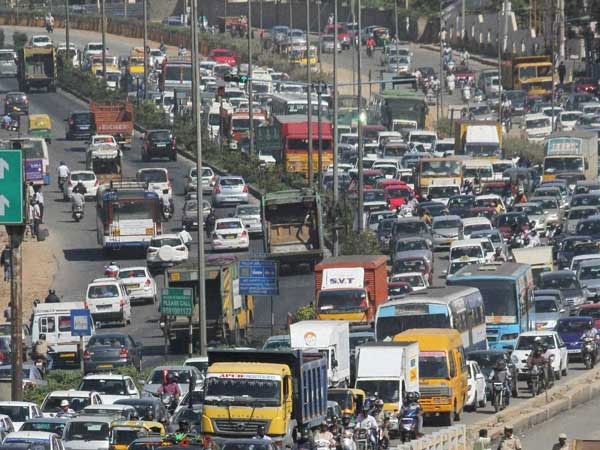
The travel experience in the city was identified as particularly poor on May 17, 2025, when congestion levels touched 101 per cent. On that day, congestion rose sharply to 183 per cent at around 6 pm, with commuters taking 15 minutes to travel just 2.5 km. In 2024, covering 10 km took 34 minutes and 10 seconds, indicating an increase of 1.59 minutes within a year. In 2025, Bengaluru’s overall average vehicle speed was recorded at 16.6 km per hour, while during peak hours it dropped to 14.6 km per hour in the morning and 13.2 km per hour in the evening.
City residents are estimated to spend nearly 168 hours, or about seven days, stuck in traffic during 2025. Chennai and Hyderabad ranked much lower on the list, with statistics indicating comparatively healthier traffic conditions. Chennai, placed 32nd globally, recorded a congestion level of 58.6 per cent.
Apart from Bengaluru, six other Indian cities featured among the top 35 most congested cities globally. Pune ranked fifth with a congestion level of 71.1 per cent. Mumbai stood at 18th place with 63.2 per cent congestion, followed by New Delhi at 23rd (60.2 per cent), Kolkata at 29th (58.9 per cent), Jaipur at 30th (58.7 per cent), and Chennai at 32nd (58.6 per cent).
While Bengaluru continues to be one of the world’s leading IT hubs, its prominent position in global traffic congestion rankings has raised fresh questions about urban development and traffic management in the city.