Daijiworld Media Network - Beijing
Beijing, Jan 19: China’s economy grew by 5 per cent last year, meeting its official target as record exports helped the world’s second-largest economy withstand weak domestic demand and a prolonged property crisis.
Beijing had set a growth target of “around 5 per cent” for 2025, even as it struggled to revive consumer spending and stabilise the real estate sector. Official data released on Monday showed that while the annual target was achieved, economic momentum weakened toward the end of the year, with growth slowing to 4.5 per cent in the final quarter compared to a year earlier.
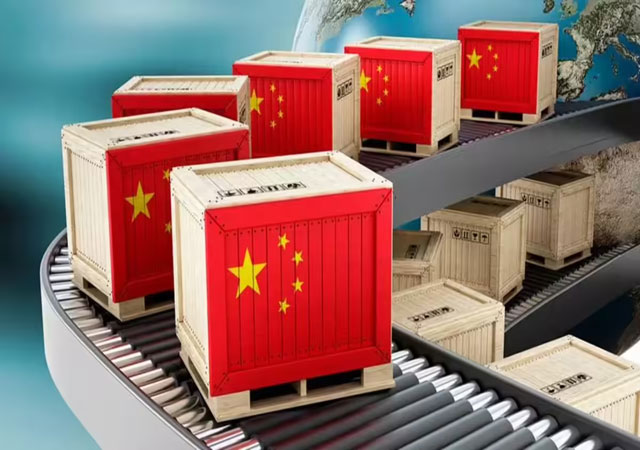
China reported a record trade surplus of USD 1.19 trillion last week, the largest ever globally, driven by strong exports to markets outside the United States. This came as President Donald Trump continued his tariff policies, prompting Chinese exporters to diversify away from the American market.
China’s economic resilience was also aided by lower-than-expected US tariffs after Beijing and Washington agreed to a temporary pause, offering some relief to exporters.
However, challenges within the domestic economy persist. The country continues to grapple with an ongoing property downturn and rising local government debt, making businesses cautious about investment and consumers wary of spending.
New data showed that house prices continued to decline in December, falling 2.7 per cent year-on-year, the sharpest drop in five months, as authorities struggled to stabilise the housing market. Property investment also contracted sharply, declining 17.2 per cent over the year.
Retail sales growth remained weak, rising just 0.9 per cent in December, the slowest pace in three years. In contrast, factory output showed relative strength, expanding 5.2 per cent year-on-year in December, up from 4.8 per cent in November.
Commenting on the figures, Louise Loo, Head of Asia Economics at Oxford Economics, said the 5 per cent GDP growth was expected given political incentives, but warned that it masked deep-rooted weaknesses in investment.
Chinese leaders have pledged to adopt “proactive” fiscal policies this year to boost domestic consumption and reduce reliance on exports and investment-led growth.
Meanwhile, China’s demographic crisis continues to deepen. The population declined for the fourth consecutive year, falling by 3.39 million to 1.41 billion in 2025, according to official data. The birth rate also dropped further to 5.63 births per 1,000 people, highlighting long-term structural challenges for the economy.