Daijiworld Media Network - Tehran
Tehran, Jan 12: At least 538 people have been killed in a sweeping crackdown on nationwide anti-government protests in Iran, activists said on Sunday, as Tehran warned that the United States military and Israel would be treated as “legitimate targets” if Washington uses force to protect demonstrators.
The US-based Human Rights Activists News Agency said more than 10,600 people have been detained during the past two weeks of unrest. The agency, which has reported accurately during previous rounds of protests in Iran, relies on activists inside the country to cross-check information. Iranian authorities have not released official casualty figures.
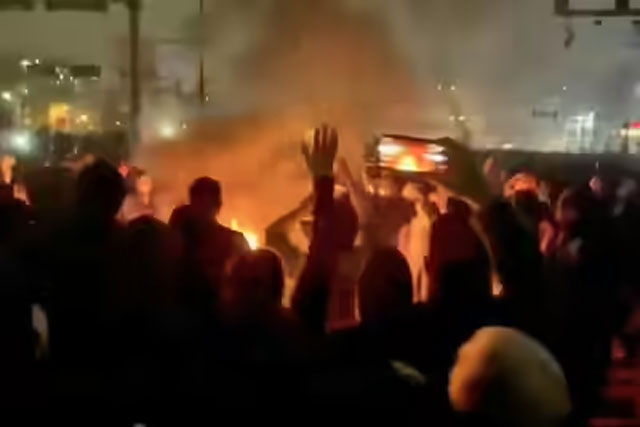
With internet services shut down and international phone lines blocked, assessing the scale of the protests from outside Iran has become increasingly difficult. The Associated Press said it could not independently verify the toll due to the communications blackout. Rights groups fear the restrictions have emboldened hardliners within Iran’s security apparatus to intensify the crackdown.
Despite the restrictions, protesters again took to the streets in Tehran and Mashhad, Iran’s second-largest city, on Sunday morning, according to activists.
US President Donald Trump expressed support for the protesters, saying on social media that Iran was “looking at freedom, perhaps like never before,” and added that the United States stood ready to help.
According to sources familiar with internal White House discussions, Trump and his national security team are weighing a range of responses to the crisis, including cyberattacks and direct strikes by the US or Israel. The White House has not indicated that any final decision has been taken.
The warning to the US and Israel came during a speech in Iran’s parliament by Mohammad Baagher Qalibaf, the hardline speaker of the legislature. He said that in the event of an attack on Iran, Israel and all American military bases, ships and facilities in the region would be legitimate targets. Lawmakers echoed the sentiment by chanting “Death to America” inside parliament.
It remains unclear how serious Iran is about launching military action, particularly after its air defence systems were damaged during last year’s 12-day conflict with Israel. Any decision to escalate militarily would rest with Iran’s 86-year-old Supreme Leader Ayatollah Ali Khamenei.
The US military said it remains postured in the Middle East to defend its forces, partners and interests. Iran had previously targeted US forces at the Al Udeid Air Base in Qatar, while the US Navy’s Fifth Fleet remains stationed in Bahrain.
Israel said it was closely monitoring developments. Prime Minister Benjamin Netanyahu, speaking after a call with US Secretary of State Marco Rubio, praised what he described as the “heroism” of Iranian citizens protesting against the regime.
International concern also mounted, with Pope Leo XIV referring to Iran as a place where ongoing tensions were claiming many lives and calling for dialogue and peace.
Videos believed to have been transmitted using satellite internet showed demonstrators gathering in Tehran’s Punak neighbourhood, waving mobile phone lights as authorities blocked streets. Footage also emerged from Mashhad and Kerman, showing protesters confronting security forces.
Iranian state television, meanwhile, broadcast images of calm streets in select cities, excluding Tehran and Mashhad. Senior security official Ali Larijani accused some demonstrators of violent acts, comparing them to the Islamic State group.
State TV aired funerals of security personnel and reported that six members of the forces were killed in Kermanshah, while violence in Fars province claimed 13 lives. Seven security personnel were also reported killed in North Khorasan province.
Even Iran’s reformist President Masoud Pezeshkian adopted a firmer stance, saying that while people’s concerns should be addressed, authorities could not allow “rioters” to destabilise society.
Exiled Crown Prince Reza Pahlavi urged Iranians to continue protests, as demonstrations that began on December 28 over the collapse of the rial have evolved into direct challenges to Iran’s theocratic system. The currency has plunged to over 1.4 million to the US dollar amid severe economic pressure from international sanctions linked to Iran’s nuclear programme.