Daijiworld Media Network – New Delhi
New Delhi, Nov 1: The Supreme Court has dismissed a Public Interest Litigation (PIL) seeking directions to all states and Union territories to implement a robust system for checking the loading capacity of passenger buses at departure points and during transit.
The petition, filed by advocate Sangam Lal Pandey, alleged that both state-run and private bus operators routinely violate load and passenger limits, compromising public safety. However, a bench headed by Chief Justice B. R. Gavai and Justice K. Vinod Chandran declined to entertain the plea, stating that the issue falls within the government’s policy domain.
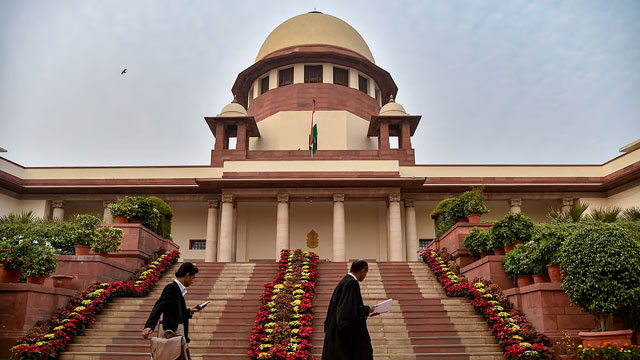
“The subject matter pertains to a policy decision under the executive’s jurisdiction. Hence, we are not inclined to entertain the writ petition,” the bench observed, dismissing the PIL.
In his plea, Pandey highlighted rampant violations by transport operators, including R.S. Yadav, Gola Bus Service, PTC-Skybus, BT Travels, Zingbus, Laxmi Holidays, Intrcity Smart Bus, Raj Kalpna Travels, Fouji Travels, and Mannat Holidays, who allegedly load cargo and passengers beyond sanctioned limits.
The petitioner cited alarming statistics from Uttar Pradesh, where 1,337 bus-related deaths occurred in 2022, accounting for nearly 29% of the national total. He claimed that overloading alone was responsible for 400–500 fatalities annually in the state.
Pandey also referenced a string of tragic incidents, including the Uttarakhand bus accident of 2024, which claimed 36 lives, asserting that “post-accident penalties” were not a sufficient deterrent.
The plea argued that the failure of authorities to enforce weight checks at terminals, despite available technologies like weigh-in-motion systems, reflected “administrative arbitrariness” and violated Articles 14 and 21 of the Constitution, which guarantee equality and the right to life.
The petition further contended that overloading not only endangers lives but also worsens air pollution. Citing a 2022 IIT Delhi study, it stated that overloaded vehicles consume 15–20% more fuel, increasing CO2 and particulate matter emissions, thereby breaching the Air (Prevention and Control of Pollution) Act, 1981.
Despite these arguments, the apex court maintained that it would not interfere in matters requiring executive policy intervention.
The decision comes amid growing concerns over rising road accidents and fatalities linked to overloading and unsafe transport practices across several Indian states.